


Listen to the audioblog (3785 words)
The End of Tethys
The humans came to Tethys with hearts full of desperation and minds driven by need. Earth was dying—its forests withering, its oceans poisoned, its skies choked with smoke. Humanity had no choice but to look beyond their own ruined world for salvation. Tethys, an ocean planet shimmering like a sapphire in the dark expanse of space, promised a new beginning, a second chance at life.

They arrived in their great ships, tearing through the planet’s atmosphere, descending upon the endless blue with all the hunger and hope of a species on the brink. For days, the humans explored cautiously, skimming the surface of Tethys’s oceans, casting their nets into its abundant waters. They marveled at the teeming life beneath them—the vibrant coral cities, the swarms of luminescent fish, the strange and wondrous creatures that moved like shadows through the deep.
But there was something else, too—something just beyond their understanding. A sound. A song that seemed to rise from the depths, so faint it was barely more than a whisper, a vibration that resonated through their bones and their minds. It was a melody of unimaginable beauty, haunting and sad, a sound that seemed to speak directly to their souls.

Dr. Manaia Te Rangi, a scientist with a heart tuned to nature’s rhythms, heard it first. Standing on the beach one night, she felt the song’s presence, felt it moving through her like a wave. She closed her eyes, listening intently, her breath catching in her throat. It was like nothing she had ever heard—soft and lilting, like the sigh of the wind through leaves, like the distant call of a bird at dusk. It spoke of a world in balance, a world alive with harmony.
But Captain Marcus Drake and the others were too focused on their mission to listen. Tethys was a world rich with resources—a world they could harvest, could use. There were minerals in its depths, fish to feed the hungry masses back on Earth, open space to build their homes. They cast their nets wider, dug their drills deeper, desperate to take what they needed.

And then, the mermaids came.
They rose from the deep like a vision, their bodies sleek and shimmering in the moonlight, their hair flowing like tendrils of seaweed in the currents. Their eyes were deep and dark, reflecting the stars above and the mysteries of the ocean below. They swam with grace and power, circling the ships, watching, waiting.


At first, they seemed curious, their movements slow and cautious. But as the humans continued to take more and more, their demeanor shifted. Their eyes grew hard, their bodies tense. They began to sing—softly at first, a gentle warning, but then louder, more insistent. A song of protest, of pain.
Captain Drake saw them as a threat. He ordered his men to drive them away, to continue their work undisturbed. The humans began to fire warning shots into the water, the sharp cracks of their weapons breaking the quiet of the night. The mermaids scattered, their song turning to a cry—a cry that cut through the air like a knife.
The next day, the conflict began.
The mermaids attacked swiftly, with the force of the ocean behind them. They capsized boats with powerful flicks of their tails, pulled men into the depths with their strong arms, and summoned massive waves that crashed against the hulls of ships. The sea itself seemed to rise against the invaders, a living force of nature that would not be tamed.

The humans fought back, their weapons flashing in the dim light, their voices raised in fear and anger. It was a battle they could not win. For every mermaid they struck down, ten more seemed to rise from the depths, their song filling the air, growing louder, more powerful, a chorus of the sea itself.
But the humans were relentless. They had come too far, risked too much to turn back now. Earth was dying and they needed a new home. Captain Drake ordered more ships into the fray, more weapons, more force. He could not see that they were destroying the very world they had come to save themselves upon.

And then, it happened.
One by one, the mermaids began to fall. The bullets pierced their flesh, the nets tangled around their tails. Their song faltered, weakened, and finally, it stopped. The last of them, Queen Lirael, stood alone amidst the carnage, her eyes filled with a deep, unfathomable sorrow. Her skin, once bright and alive with light, was now pale and fading.
She looked up at the humans, at the destruction they had wrought, and in her gaze, there was no hatred, no malice—only a profound, aching sadness. She opened her mouth, and for a moment, it seemed she might sing again, but no sound came. Her strength was gone.
The humans, driven by their need, took her. Bound her in chains, trapped her in a cage of metal and glass. She did not resist. They had destroyed her home and she had no more fight left in her. They brought her aboard their ship, the last living remnant of a world now lost to them.

Behind her, the ocean of Tethys grew still. The creatures that once thrived there began to die, one by one, their lifeforce fading as the mermaids’ song vanished from the waters. The vibrant reefs turned gray, the fish floated lifelessly to the surface, and the deep, dark blue of the ocean dulled to a lifeless gray.
Without the mermaids to guide them, to nurture them, the delicate web of life on Tethys unraveled, and the planet began to die. The humans had destroyed it—just as they had destroyed Earth. They had come seeking salvation, but they had brought only death.
Queen Lirael, the last of the mermaids, closed her eyes as they took her away. She knew what awaited her. She could feel her strength fading, her spirit waning, but she would not leave this world without offering her final gift—a song of love, a song of hope, a song that might yet save another dying planet.
And so, she was brought to Earth, a captive in a strange and distant world, a single, fading voice amidst the clamor of a dying species.

A Dying Queen
Queen Lirael arrived on Earth with the quiet dignity of the last living being of her kind. The humans placed her in the Biosphere Reserve in Arizona, a stark facility meant to replicate some semblance of her lost home. The tank they created for her was vast and deep, with clear, cold water that stretched high to the domed ceiling. But it was sterile, lifeless. There were no currents to guide her, no vibrant creatures to share the space, no song to sustain her.
Lirael floated in the stillness, her once-luminous skin growing paler by the day, her breath slowing, her eyes half-lidded and weary. She could feel the slow ebb of life within her, like the tides retreating for the final time. She was alone, utterly alone, cut off from the soul of Tethys, from the voices of her people, from the currents that had once cradled her. And yet, she held onto a single thread of purpose—a last act of love.

News of Lirael’s presence spread across Earth like wildfire. In a world teetering on the brink of collapse, she became a symbol, a curiosity, a mystery. Crowds gathered outside the Biosphere Reserve, hoping for a glimpse of the mermaid queen, this final voice from a lost world. But Lirael barely moved, her eyes fixed on a horizon that no longer existed, her lips occasionally parting to release the faintest of songs—a sound so soft it was nearly inaudible, but one that carried a strange, aching beauty.
Dr. Manaia Te Rangi knew she had to come. She had been there on Tethys. She had seen the death of a world. She had felt the weight of its loss like a stone in her chest, a heavy knowledge that pressed against her heart with every breath. She had watched as the humans, blinded by need and greed, had destroyed everything they had hoped to save.
She stood now outside the chamber where Lirael floated, her hand pressed against the cool glass, watching the mermaid’s pale form drift slowly in the clear water. The room was quiet, filled only with the soft hum of machines that monitored Lirael’s vital signs, a faint heartbeat that seemed to echo through the stillness like the ticking of a distant clock.

“Lirael,” Manaia whispered, her voice trembling. “I’m here to listen. To learn… will you help us?”
Lirael’s eyes fluttered open, and for a moment, Manaia saw the faintest spark of recognition, a flicker of life. The mermaid’s lips didn’t move, but she heard her voice, barely more than a breath, carried through the water and washed through her head.
“I am dying,” Lirael said, her words soft and broken. “But I have one last gift to give… if your people will listen.”
Manaia’s heart clenched. “We’ll listen,” she promised. “I’ll make sure they listen. What is it you want to say?”
Lirael’s eyes closed for a moment, and then she opened them again, her gaze steady, determined. “I want to sing… my last song. Let all your people hear it. Open their hearts to the music… and they will understand.”
Manaia nodded, swallowing the lump in her throat. She turned to the technicians, her voice urgent, commanding. “We need to broadcast her. Everywhere. Let the whole world hear.”
They moved quickly, setting up microphones, speakers, transmitters. A hush fell over the room as the final preparations were made. Then, with a nod from Manaia, they began the broadcast.

The Last Song
Lirael took a deep breath, her eyes closing once more. She could feel the weight of her fading strength, the pull of the world she had lost, but she held onto the single thread of her purpose. She swished her tail, raised her arm and dropped her head, and the song began.
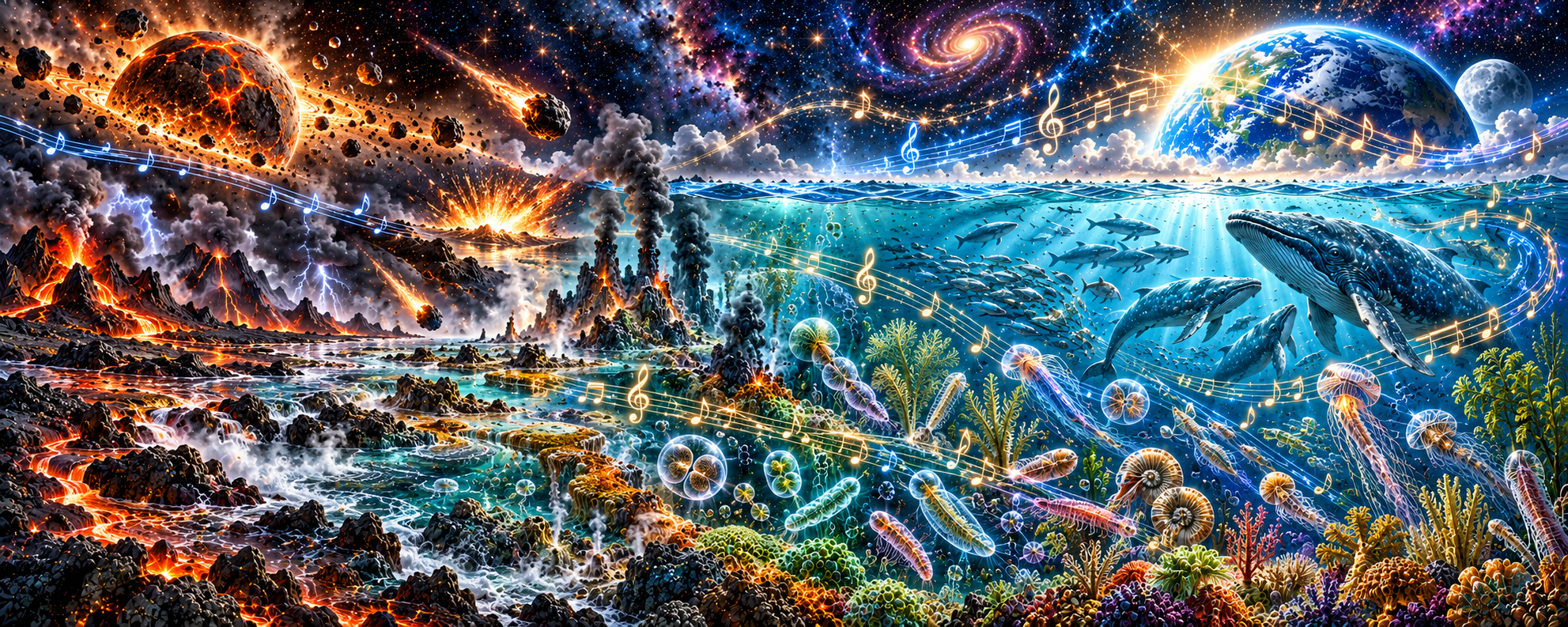
At first, it was soft, so soft it seemed to be little more than a whisper, a sigh carried on a gentle breeze. But then it grew, slowly, steadily, a melody that seemed to rise from deep within her, flowing like a river, like a tide that could not be stopped.
The song moved through the air, through the water, through the speakers and into the world beyond, carried across the airwaves, spreading like light in the darkness. Many heard it not through their ears but in their hearts, the essence of her message pulsing through their body.
And the world listened.

Her message began and echoed across the planet: You were given Earth, a gorgeous paradise.
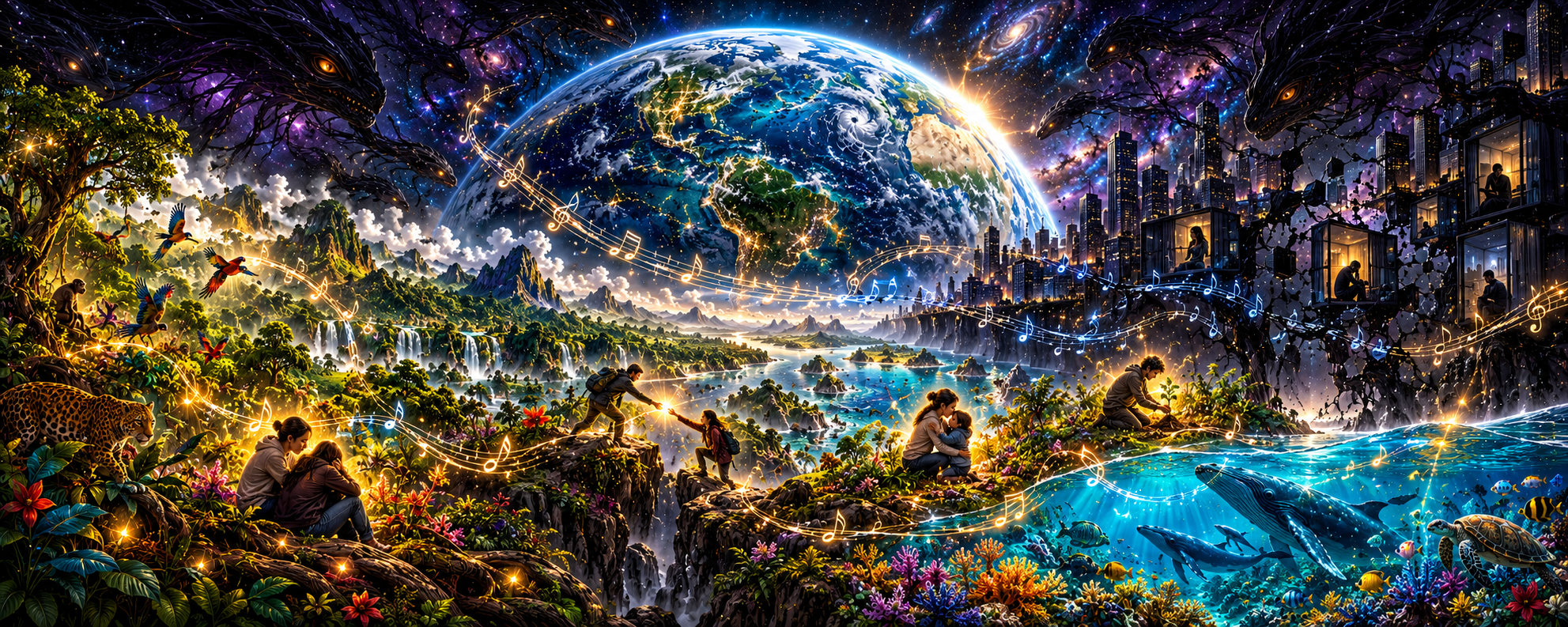
Lirael’s voice was filled with wonder and love, a deep, resonant tone that seemed to vibrate through the very air. She sang of Earth’s beauty, of its vibrant forests and endless oceans, its towering mountains and flowing rivers. She sang of the delicate balance that sustained all life, of the intricate web that connected every living being. She sang of the paradise that had been given to humanity, a gift of unimaginable grace.
People across the planet listened, their hearts stirred by the beauty of her voice, by the vivid imagery that filled their minds, by the sensation of being drawn into something greater than themselves.

You have been destroying Earth with unbridled growth and greed.
Her voice shifted, became tinged with sorrow, a lament for all that had been lost. She sang of deforestation, of polluted seas and poisoned skies, of species driven to extinction, of rivers running dry and glaciers melting into the ocean. She sang of human hands that took without thought, that consumed without care, that ravaged the very world that sustained them.
The tone was mournful, haunting, a dirge that spoke of grief and regret. And as they listened, people felt the weight of her words settle deep in their chests, a heaviness that brought tears to their eyes, a sense of guilt that clenched at their throats.

Your future is death, as the world’s ecosystems will collapse and kill everything.
Her voice grew urgent, almost frantic, as if pleading with them to understand. She sang of the future that awaited them—a future of barren landscapes and empty oceans, of storms that would tear apart cities and fires and floods that would displace millions. She sang of collapse, of chaos, of a world that would turn on itself as it fought to survive.
She painted a picture of a dying Earth, a world that had lost its balance, its harmony, a world that could no longer sustain the life it had once nurtured. The vision was stark, terrifying, a warning that could not be ignored.

We lived in harmony with our planet by living close to nature, living a simple life, and co-existing with living things and respecting the planet, the giver of life.
Her voice softened, a gentle note of hope threading through the sorrow. She sang of her people, the mermaids of Tethys, who had lived in balance with their world, who had taken only what they needed, who had given back as much as they had received. She sang of a life lived in harmony with nature, a life of simplicity, of joy, of coexistence.
She offered a different way, a different path, a choice. She sang of the possibility of change, of redemption, of a future where humans could live in balance with the Earth, could heal the wounds they had inflicted, could find peace.
The World Listens
As the final notes of Lirael’s song faded into the air, a deep silence fell over the world. For a moment, it seemed that even the wind had stilled, the very Earth holding its breath, listening.
People everywhere felt something within them shift, a tiny flicker of understanding, of awareness, of connection. They had heard her song, truly heard it, and something deep inside them had stirred.


Manaia stood by the tank, her hand pressed against the glass, her face wet with tears. She could feel Lirael’s strength fading, could see the light in her eyes dimming. But she also saw the faintest smile on the mermaid’s lips, a look of peace, of acceptance.
“Thank you,” Manaia whispered, her voice thick with emotion. “You’ve given us a chance.”
Lirael’s eyes closed, her body drifting slowly in the water, her breath coming in shallow gasps. Her work was done, her final gift given. She felt a deep sense of calm, of release, of surrender.
A Question for Humanity
The broadcast ended, but the world remained quiet, thoughtful, her words lingering in the air like a question, like a challenge.
“Can we learn a new way of living and avoid the tragedy of Tethys on Earth?”
In homes and schools, in cities and villages, in places of power and places of poverty, people talked, debated, reflected. Some dismissed her song as a fantasy, a myth. But others listened, truly listened, and felt the weight of her message in their bones.
They had been given a choice, a path forward. The question remained: Would they take it?
The world held its breath, and somewhere, deep in the heart of the Earth, a small, fragile spark began to glow. Hope.
Watch the Video on YouTube:
Check out the Book!

Guide to the secrets of Mermaid Planet:
What language is Queen Lirael’s song written in?
I used Quenya (Elvish) because I wanted viewers to focus on the melody and imagery of her song rather than the words. There are close captions on the video for Quenya (listed as Faroese for a lack of options) and English for the translation.
Her full song in Quenya:
Her full song in English:
Her full song in Gaelic (another great melody):
What is the symbol on Lirael’s forehead?
It is the symbol for Gaia, the Earth Goddess in Greek mythology. Queen Lirael represents Mother Earth, the spirit of nature, the ancestral mother of all life. The spiral is a symbol of feminine power and represents fertility and the bringer of life.
Why did humans kill the Mermaids?
The male army represents the patriarchal force leading the destruction of Earth. Through overwhelming physical force it defeats the female mermaid planet, which harnesses nature spirits to defend their planet. The battle represents men’s domination over woman through aggression and violence and colonization by physical force and the destruction of the spiritual. In the story, humans seek a new Earth because they have destroyed their home but yet they bring the same destructive culture to Tethys and destroy their own salvation.
What is the role of Dr. Manaia Te Rangi?
She is an indigenous Māori scientist that tries to communicate with the mermaids instead of killing them. She represents a link between the metaphysical (mermaids) and the physical (humans) that many indigenous cultures have embedded in their culture. She is a symbol of how indigenous people can lead Earth’s transformation to a sustainable society. Manaia is a mythological creature in Māori culture with a head of a bird, body of a man, and tail of a fish. The Manaia is believed to be a messenger between the earthly world of mortals and the spiritual domain.
What are the parallel plots in the story?
| Plot Points | Army Colonization | Mermaids | Lirael’s Song |
| Provenance | Discover bountiful planet | Living in peace | Gift of Earth |
| Indigenous Life | Mermaids living harmoniously with their planet | Mermaids welcome humans | Co-exist with life, respect the planet |
| Colonization | Extract resources, defeat enemies | Creatures attack colonizers | Destroying Earth with growth and greed |
| Total War | Annihilation of mermaids, planet dies | Planet fights back | Kill Earth, all will perish |
What is the planet called Tethys?
Tethys is named after a figure from Greek mythology. She is one of the Titans, the daughter of Uranus (Sky) and Gaia (Earth). Tethys is often associated with the nurturing and nourishing aspects of water. Here are some key points about Tethys:
Representation: In art and literature, Tethys is sometimes shown alongside Oceanus, embodying the union of fresh water and sea water, crucial elements for life and the natural world in Greek cosmology.
Role and Family: Tethys is the wife of Oceanus, another Titan, and together they are considered the parents of the major rivers, springs, streams, and fountains of the world, as well as the Oceanids, who are nymphs of the ocean.
Symbolism: Tethys is often depicted as a maternal figure representing the fertility and life-giving aspects of fresh water.
Mythological Significance: While she is not as prominent as some other deities in Greek mythology, Tethys plays a crucial role in the genealogy of water deities and is part of the ancient and powerful Titan generation.
What are the origins of mermaid myths?
The mythological origins of mermaids can be traced back to ancient civilizations and their folklore, with various cultures contributing to the mythos. Here are some key origins and influences:
- Ancient Assyria: One of the earliest known mermaid legends comes from Assyria around 1000 BC. The goddess Atargatis, associated with fertility and water, is said to have transformed herself into a mermaid out of shame after accidentally killing her human lover.
- Greek Mythology: In Greek mythology, sirens are often conflated with mermaids. Sirens were originally depicted as bird-women but later became associated with the sea and depicted as fish-women. They were known for their enchanting voices that lured sailors to their deaths.
- Roman Mythology: The Romans adopted the Greek myths and further developed the concept of mermaids, blending them with their own sea deities like Neptune and Triton. Mermaids became associated with omens and the supernatural, often seen as both beautiful and dangerous.
- European Folklore: Throughout the Middle Ages, mermaid legends proliferated across Europe. In British folklore, mermaids were often seen as omens of shipwrecks and storms. In Scandinavian lore, they were known as “havfrue” and were believed to be both benevolent and malevolent, capable of both helping and harming humans.
- African Mythology: In African traditions, particularly among the Yoruba people, the water spirit Mami Wata is depicted as a mermaid. Mami Wata is a complex deity associated with fertility, wealth, and healing, but also capable of causing misfortune if angered.
- Asian Mythology: In Japanese folklore, the “ningyo” is a creature similar to a mermaid. It is described as having a human face and a fish body, and its flesh is said to grant immortality if eaten. However, catching a ningyo was believed to bring storms and bad luck.
- Celtic Mythology: In Irish and Scottish legends, mermaids are known as “selkies” or “sea people.” Selkies could transform from seals into humans by shedding their skins. These stories often revolve around themes of love and loss, with selkies being both alluring and tragic figures.
- Polynesian Mythology: In Polynesian culture, the goddess of the sea, Vatea, is often depicted as a mermaid-like figure. She embodies the life-giving and destructive powers of the ocean, reflecting the dual nature of mermaids in many myths.
These diverse origins highlight how mermaid myths have evolved and been influenced by various cultures over millennia, blending elements of beauty, danger, and mystery.
What are some cool mermaid myths?
Here are ten common myths surrounding mermaids:
- Half-Fish, Half-Human: Mermaids are often depicted as having the upper body of a human and the lower body of a fish.
- Siren Song: Mermaids are believed to have enchanting voices that can lure sailors to their doom, leading them to shipwrecks.
- Benevolent Protectors: Some myths portray mermaids as protectors of the sea, helping sailors and warning them of impending storms.
- Immortality: Mermaids are often thought to be immortal or have extremely long lifespans, living for hundreds of years.
- Transformation: In some stories, mermaids can transform into humans, either permanently or temporarily, often to live on land or fall in love with humans.
- Treasure Hoarders: Mermaids are sometimes believed to guard underwater treasures and sunken ships.
- Cursed Souls: Some myths suggest that mermaids are the souls of drowned women or are women cursed to live as mermaids.
- Healers and Magical Powers: Mermaids are often attributed with healing powers and other magical abilities, such as controlling the weather or summoning sea creatures.
- Symbol of Love and Beauty: In various cultures, mermaids symbolize love, beauty, and allure, often depicted as stunningly beautiful and graceful.
- Dangerous Predators: In contrast to their benevolent portrayal, some legends describe mermaids as dangerous predators that drag unsuspecting victims to their watery graves.
These myths vary widely across different cultures and time periods, contributing to the rich and diverse folklore surrounding mermaids.




Leave a Reply