

Behind the Songs is a series of short reflections on the worlds, ancient histories, and cosmology of my Songs of the Universe trilogy. In each post, I explore one idea—what it means within the story, how it connects to the larger journey, and how science, nature, philosophy, and imagination helped bring it to life.

Behind the Songs • Part 2
What Does a Star Sound Like?
As a surfer, I have spent a great deal of time listening to waves. Sometimes you hear a swell breaking before you can see it, especially in darkness or fog, and that sound tells you something about the ocean beyond your view. I find a similar wonder in the discovery that stars have their own internal rhythms. Pressure waves travel through their interiors, producing oscillations astronomers can detect through changes in brightness. Those patterns reveal something about a star’s size, structure, and age. Studying them is a way of listening through light.
We would not hear a star from a spacecraft window; ordinary sound needs material through which to travel. But inside a star, that material is abundant. Scientists can also shift measured stellar oscillations into frequencies we can hear, allowing us to experience their patterns as sound. The resulting tones are translations of physical processes rather than recordings made with a microphone. Still, I find the idea remarkable: that something that appears steady in the night sky is filled with movement and sound.

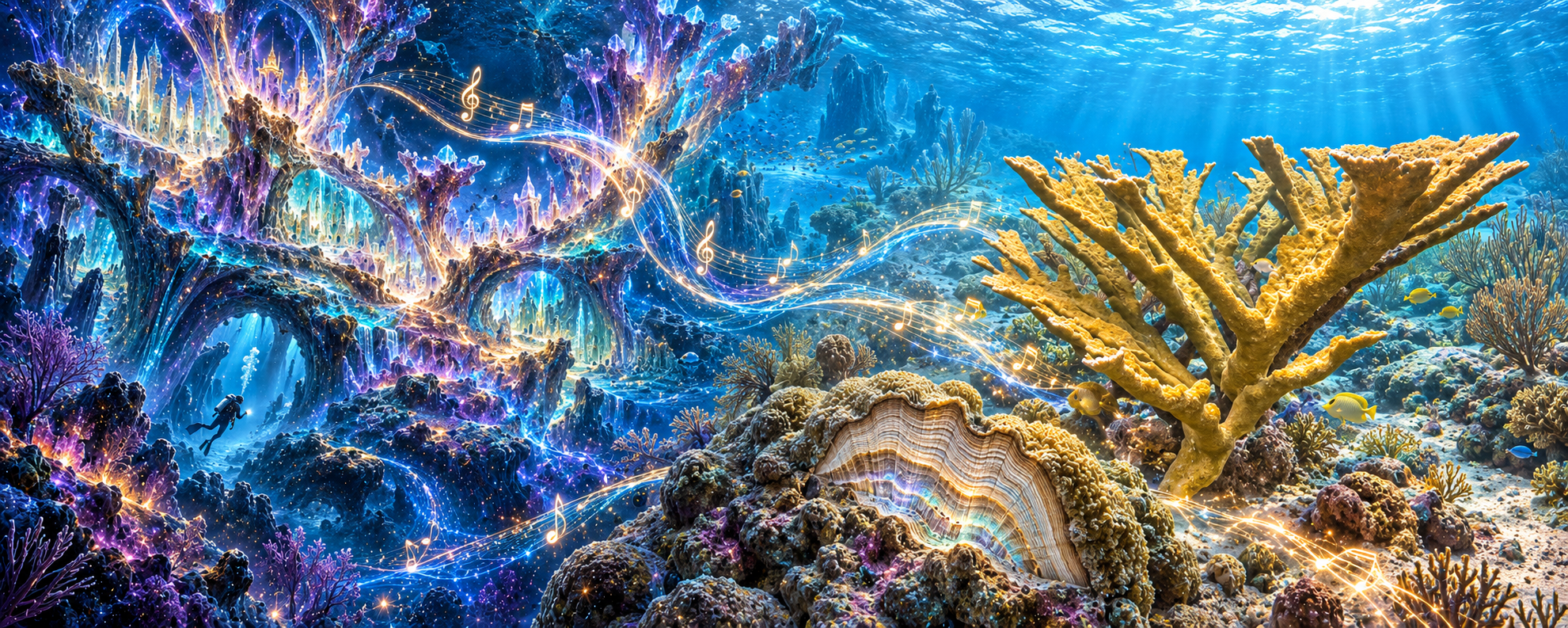
Planets have rhythms too. Rotation brings day and night, orbits mark years, and moons pull tides through oceans. Storms gather and dissolve; currents carry heat; volcanic activity changes landscapes. Life develops within those movements, adapting to cycles that were present long before it arrived. On Thalassa, Hina’s changing influence becomes part of the rhythm organisms must survive. Their responses give the planet’s music another layer, as physical cycles become woven into feeding, reproduction, migration, and relationships among species.
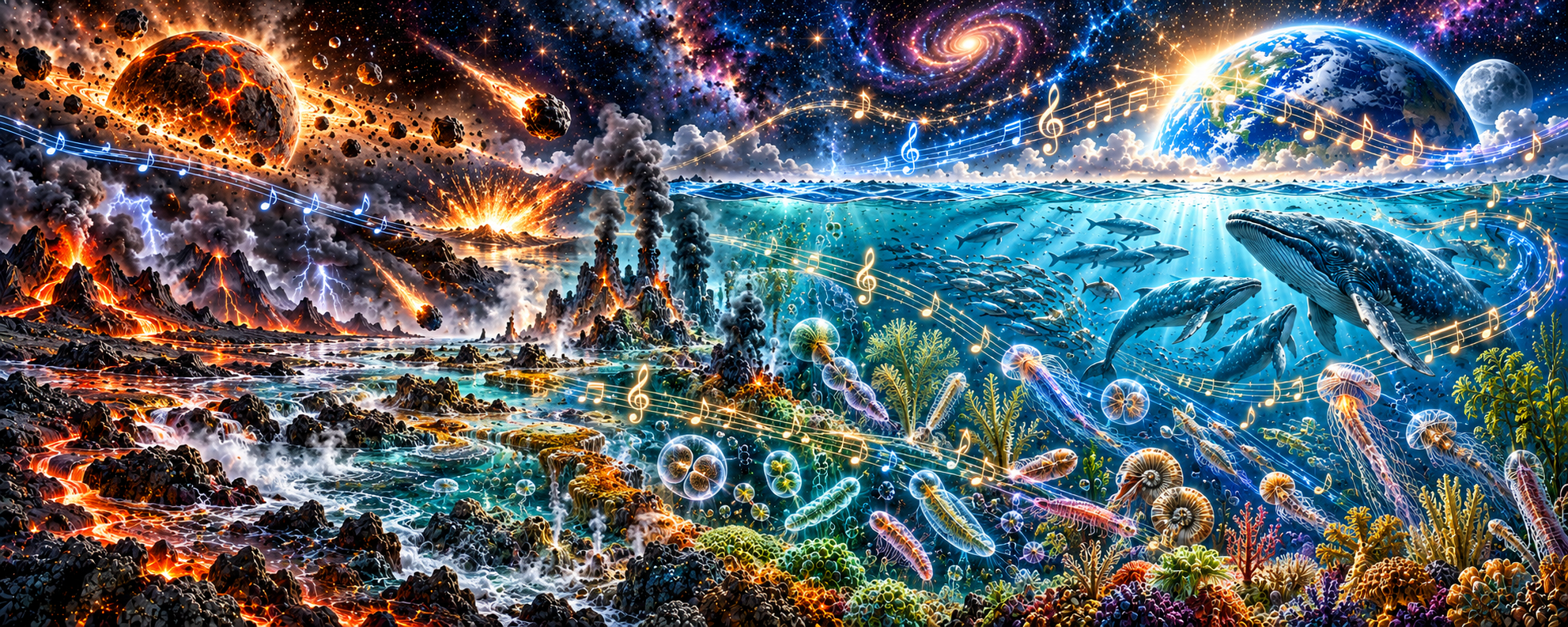
I imagined this unfolding across immense stretches of time. Matter acquired form; stars forged carbon, oxygen, iron, and more complex elements; planets cooled beneath storms and impacts. In sheltered environments, chemistry could persist, repeat, and become increasingly complex. The actual transition from chemistry to life remains an open scientific question, but in the trilogy I followed that possibility into organisms capable of maintaining themselves and reproducing. Life persisted, adapted, and joined with other life. Across branching evolutionary histories, some lineages acquired sensation, memory, anticipation, and increasingly flexible ways of responding to the world.

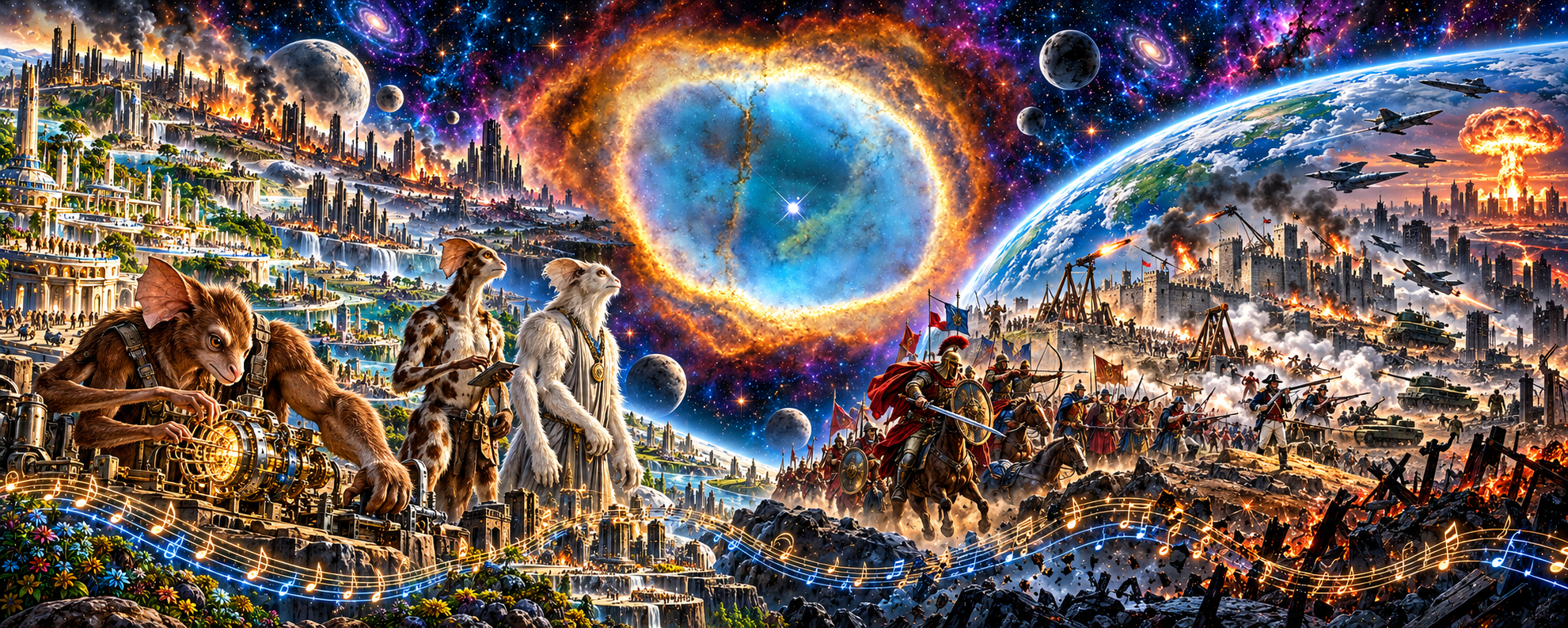
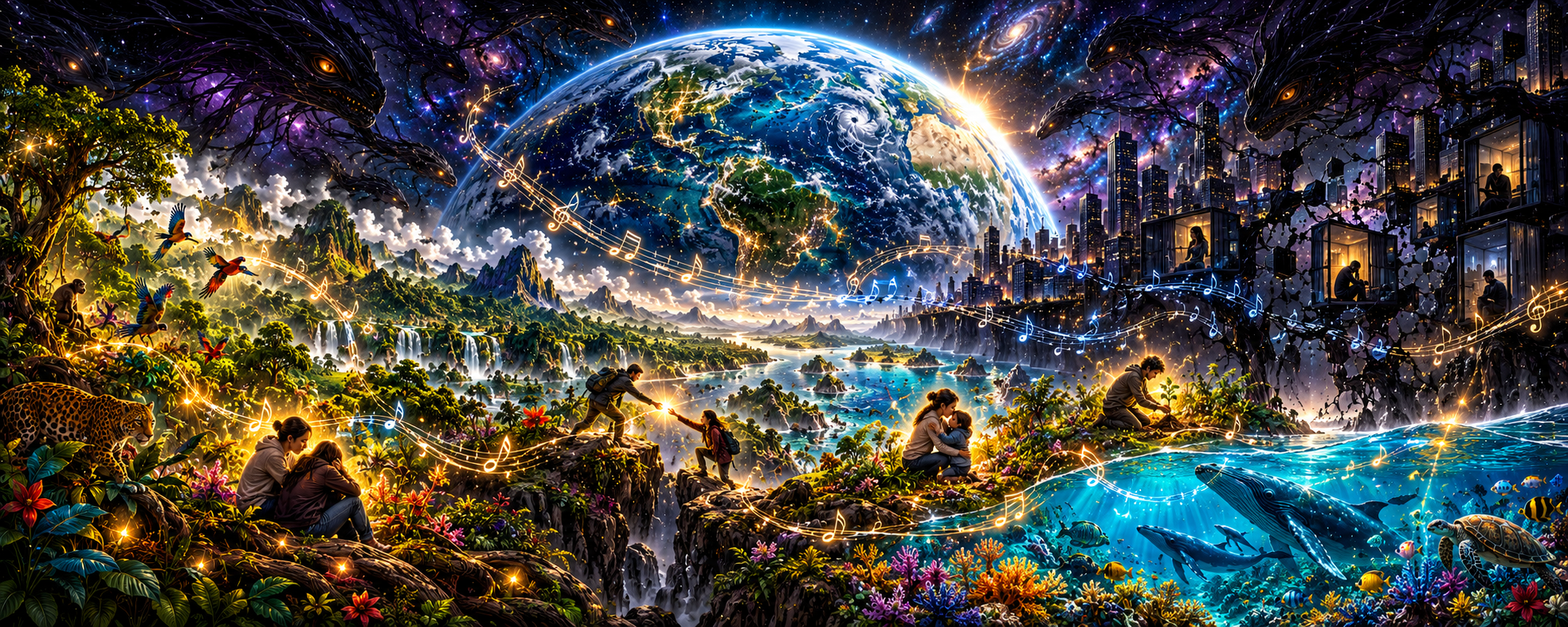
That progression interested me because it changes what a rhythm can mean. A tide moves through an ocean whether anything notices it or not. An organism senses that tide and changes its behavior. Another remembers where food appeared, recognizes a companion’s call, or waits for the return of a season. Eventually, a world contains beings capable of hearing patterns and answering them. In my imagined cosmology, those encounters allow the universe’s music to become something experienced and shared.
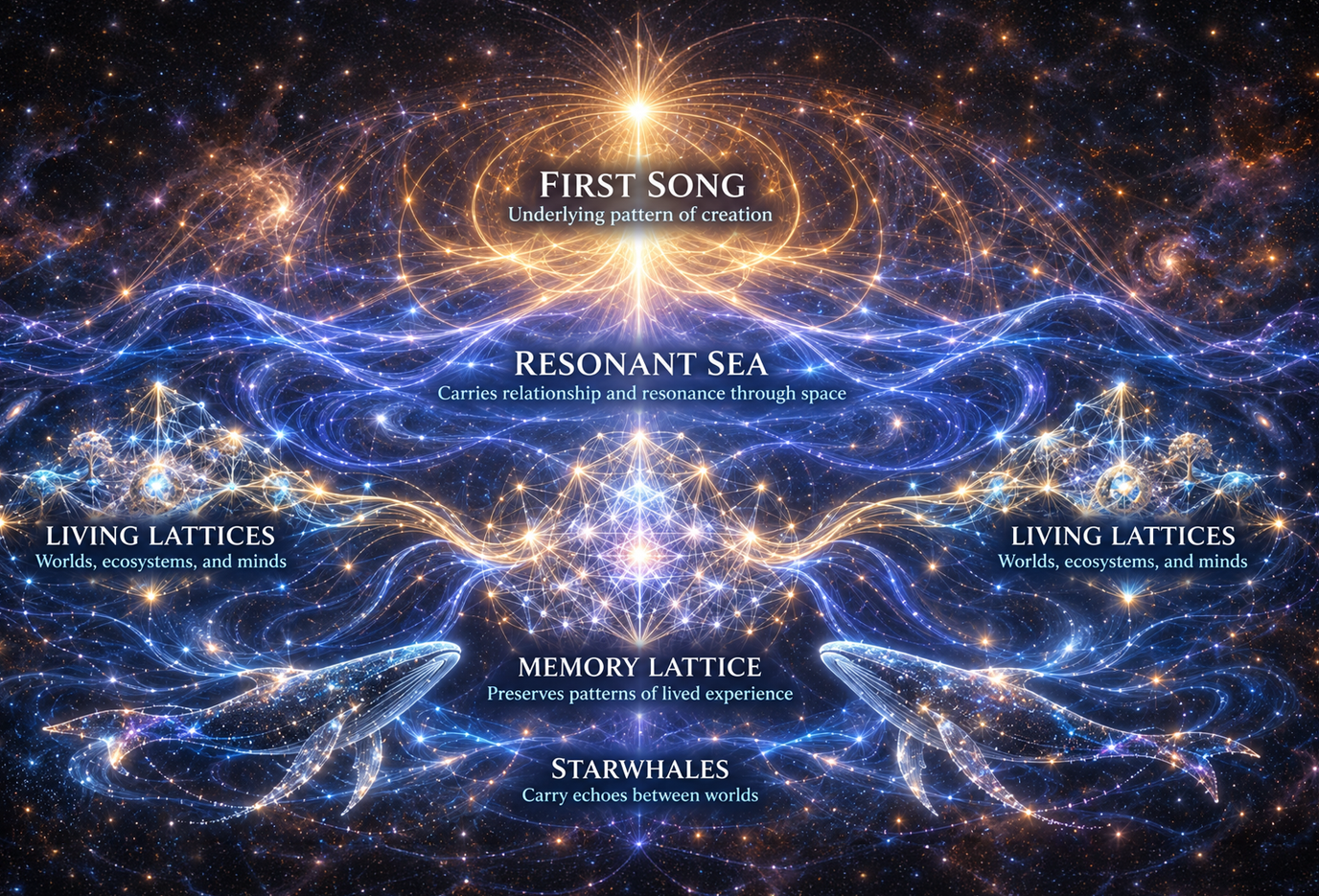
This is where I carried the physical rhythms into living worlds whose presence could be perceived. Their songs hold the relationships among oceans, organisms, memory, and awareness. Music gave me a way to imagine those relationships because distinct voices can contribute to something none could sustain alone. Sage begins by hearing unfamiliar sounds on Thalassa. Gradually, she learns to recognize a world—and to understand that listening asks something of her in return.

Leave a Reply