My Life as a Surfer


I began surfing as a kid in Pacific Beach first on foam boards and then, at thirteen, on my first real surfboard, and it quickly became far more than a sport. Dawn patrols meant getting up in darkness, grabbing my board, and heading for the beach in search of clean, uncrowded waves. I surfed Pacific Beach, Crystal Pier, Law Street and Diamond Street, then ventured farther afield to Windansea, Big Rock, Blacks and down the coast into Baja. Surfing became a way of organizing my life around the ocean—its tides, winds, swells and seasons—and the search for the next wave became a reason to explore.

That search followed me wherever I went. In Northern California, I was among the early surfers exploring Fort Point beneath the Golden Gate Bridge, along with other breaks around San Francisco and the coast. When I arrived at Cal Poly in San Luis Obispo in 1975, surfing was a major part of why I wanted to be there. I lived in Shell Beach and surfed Pismo Pier, St. Ann’s, Sewers and the many breaks scattered along the Central Coast. Eventually my surfing extended from Southern California through Big Sur, Santa Cruz, Northern California, and Oregon, as well as across the country to the East Coast.

But surfing also gave me a desire to see what lay beyond the familiar coastline. In 1978, at twenty years old, I traveled to Bali, then still a remarkably remote destination for an American surfer. I rented a small room in Kuta for about $1.25 a day, strapped my surfboard to a motorcycle and explored Kuta, Legian, Nusa Dua and Uluwatu with my brother. Getting to Uluwatu meant traveling through the countryside and then walking through fields and streams before descending the cliffs to the reef. There were no hotels lining the cliffs and no crowds waiting in the water. I remember warm, crystal-clear water, coral visible beneath me and long left-hand waves peeling down the reef. For three weeks I surfed, snorkeled, explored the island and immersed myself in a culture and landscape unlike anything I had known.


Surfing eventually carried me to Hawaii and Tahiti as well, while my continuing search for waves took me up and down both American coasts and into increasingly remote places. I also began carrying cameras with me. In the early 1970s I borrowed my father’s 8mm camera to make surf movies; later I bought a Super 8 camera and an underwater housing that allowed me to film from inside the waves. Surfing was becoming not only something I did, but something I wanted to observe, understand and capture.

As surfing became more popular, however, the empty waves of my youth became harder to find. The dawn patrol had once been our strategy for escaping the crowds: paddle out before sunrise, surf for a few hours and sometimes have the ocean almost to ourselves. Over the years, more surfers began doing the same thing, sending me farther afield in search of uncrowded waves. One of those journeys took me deep into Baja in 1986, eventually reaching remote Isla Natividad, where surfing and my growing scientific interest in abalone came together.


That convergence ultimately changed my life. Surfing had taught me to read the ocean from the surface, but I became increasingly curious about what was happening beneath my board. After becoming SCUBA certified, the coral reefs I encountered in Bali helped turn that curiosity into something more serious. My passion for surfing gradually became a passion for understanding the ocean scientifically. Graduate school followed, then a career studying rocky shores, kelp forests, coral reefs and eventually the deep sea, and ultimately more than three decades as a marine biologist, researcher and professor.

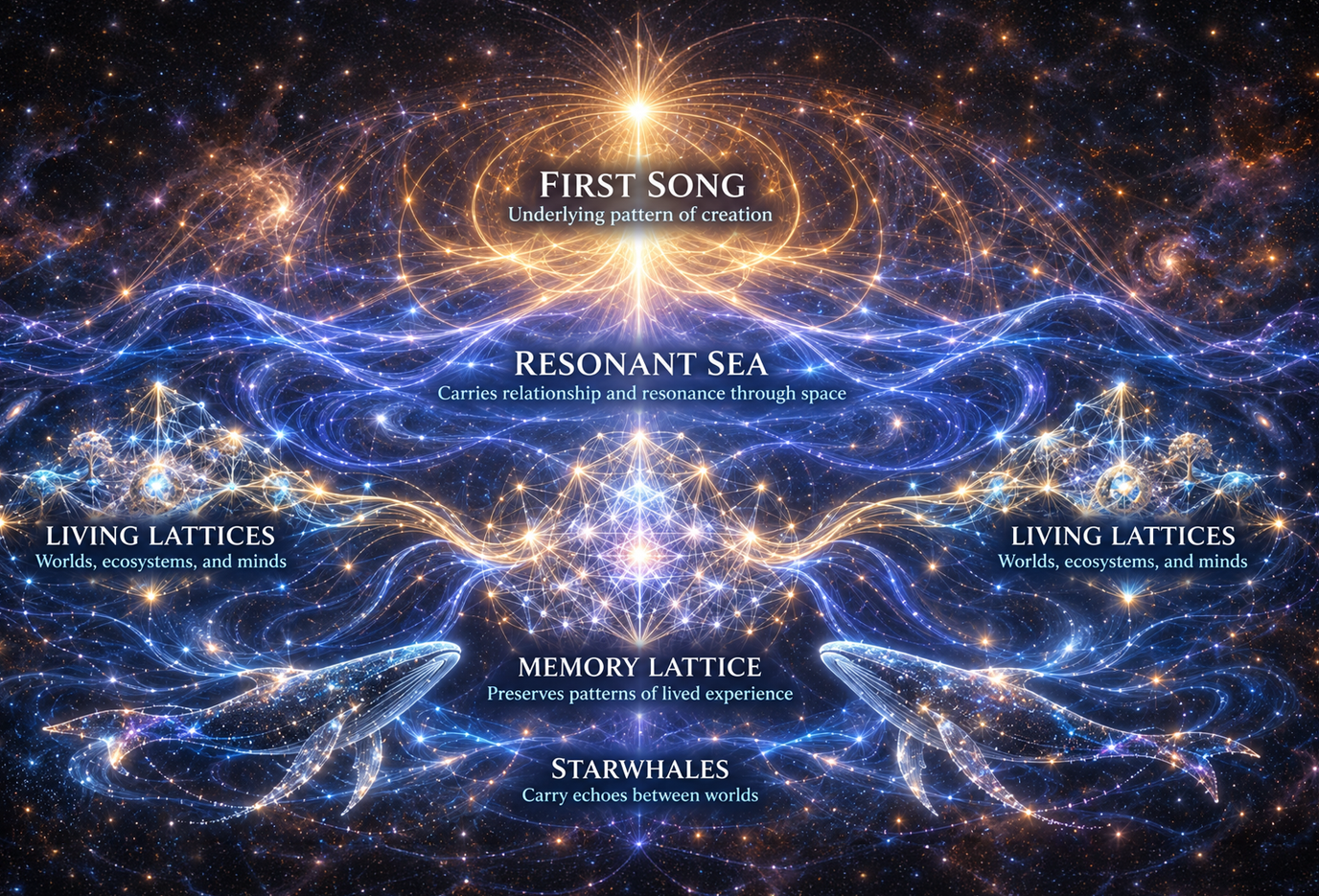
And in an unexpected way, surfing eventually carried me somewhere even farther away. After decades of studying how life responds to the ocean—and watching ecosystems change under increasing human pressure—I began imagining other oceans, other planets and other ways life might experience the universe. A story that began with the idea of surfing enormous waves on another world eventually became Songs of Thalassa and grew into the Songs of the Universe. The path wasn’t something I planned. It simply unfolded: surfing led me into the ocean, the ocean led me into marine biology, and marine biology eventually led me to science fiction.