


Behind the Songs is a series of short reflections on the worlds, ancient histories, and cosmology of my Songs of the Universe trilogy. In each post, I explore one idea—what it means within the story, how it connects to the larger journey, and how science, nature, philosophy, and imagination helped bring it to life.

Behind the Songs • Part 9
Whale Song: A Model for Interstellar Sound
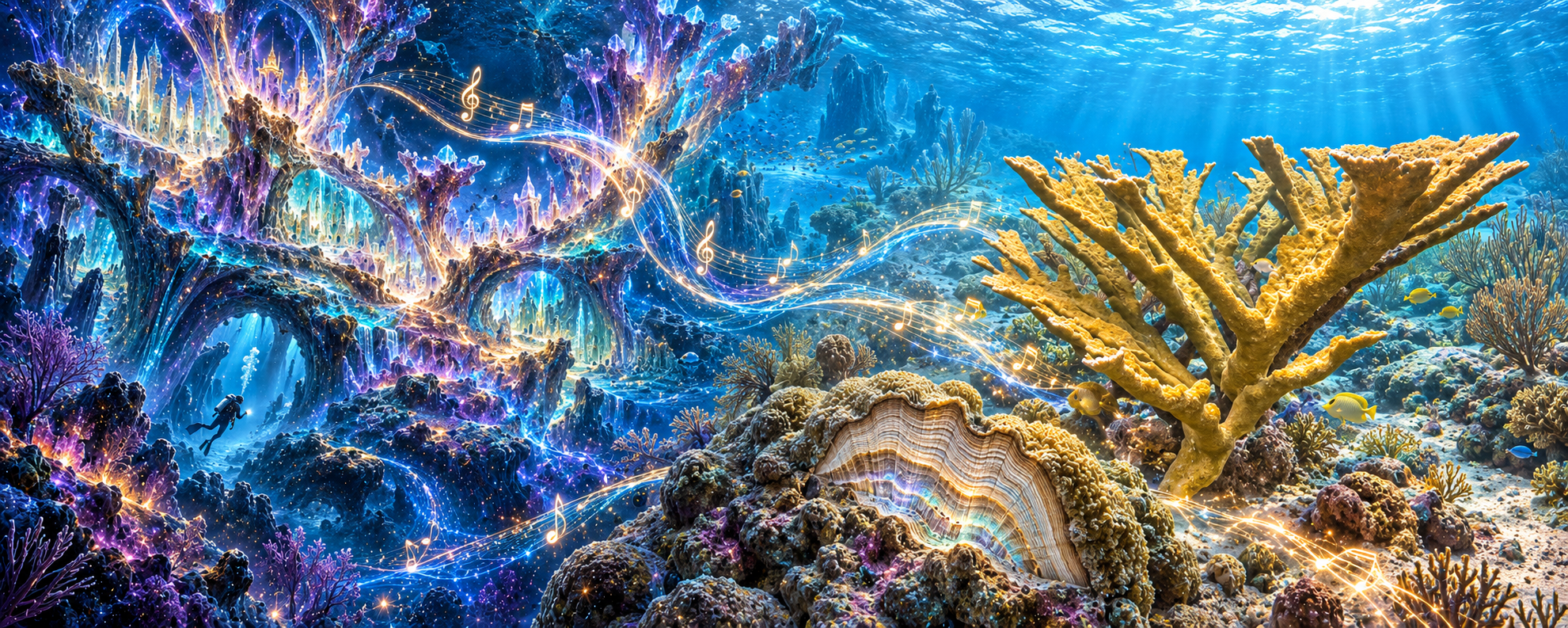
Whale song brings together much of what drew me toward writing these books: the ocean, unfamiliar intelligence, and the experience of hearing something beautiful without fully understanding it. Beneath the surface, a whale’s voice can fill water that appears empty, revealing a presence beyond sight. In my earlier writing about nature’s soundscapes, I explored how living communities become audible through their many voices—and what disappears when those voices fall silent. Cetaceans gave that concern an emotional center and, eventually, a foundation for imagining the songs of other worlds.
What particularly interested me was that whale songs change. Male humpbacks arrange sounds into repeated phrases and themes, with singers within a population generally sharing a changing song. Sometimes those changes are gradual; sometimes an unfamiliar song spreads between populations and replaces an earlier one. Research has traced these cultural “revolutions” across the South Pacific, showing how learned patterns can connect populations separated by enormous distances. A song can preserve a shared identity while continually becoming something new.
That became a model for the Nesoi’s ability to adapt to Thalassa. Their planet’s violent cycles demand knowledge that can endure across generations while remaining responsive to changing conditions. I imagined their songs carrying remembered routes, warnings, relationships, and experiences, with new phrases entering as circumstances changed. Humpback song research demonstrates cultural transmission rather than proving that whales encode ecological instructions in their songs; I extended that capacity through fiction. The Nesoi survive partly because their inheritance can change as they learn.

I also drew upon several cetacean abilities when imagining their voices. Beluga-like whistles inspired communication through air, sperm-whale-like clicks suggested underwater navigation, and humpback songs offered a model for their richer underwater exchanges. Bringing those capacities together gave the Nesoi an acoustic life suited to islands, caves, and open seas. Their voices eventually join those of the Ceti and Baleena, allowing Sage to encounter Thalassa as a living community she must learn to hear (“The Song Awakens”).
Our understanding of actual whale communication remains partial. Researchers use hydrophones, spectrograms, observations, and increasingly computational methods to connect vocal patterns with behavior and social context. We recognize song structures, learned traditions, and distinctive patterns of exchange. Research on sperm-whale click sequences has revealed combinations of rhythm, tempo, and other features, although identifying that structure does not translate their conversations. That gap between recognizing organization and understanding meaning gave me room to imagine Sage’s discoveries.
Low-frequency sound offered another connection. Some cetacean calls extend below ordinary human hearing, while elephants use rumbles with infrasonic components to maintain contact across kilometers under suitable conditions. Long wavelengths and favorable environments can allow signals to reach well beyond the caller’s immediate surroundings. I found that possibility compelling: a world may contain exchanges we fail to notice because our senses operate within such a narrow range.

Carrying that idea into space required a much larger imaginative step. Space is not a total vacuum and contains gas and plasma, and some environments support genuine pressure waves. Around the Perseus cluster’s central black hole, astronomers have identified ripples traveling through hot gas across hundreds of thousands of light-years. Their characteristic period is about 9.6 million years—a rhythm profoundly beyond human hearing or human lifetimes. Sparse matter alone does not guarantee that sound will propagate: conditions, wavelength, and damping matter, and such waves offer no rapid conversation between stars.
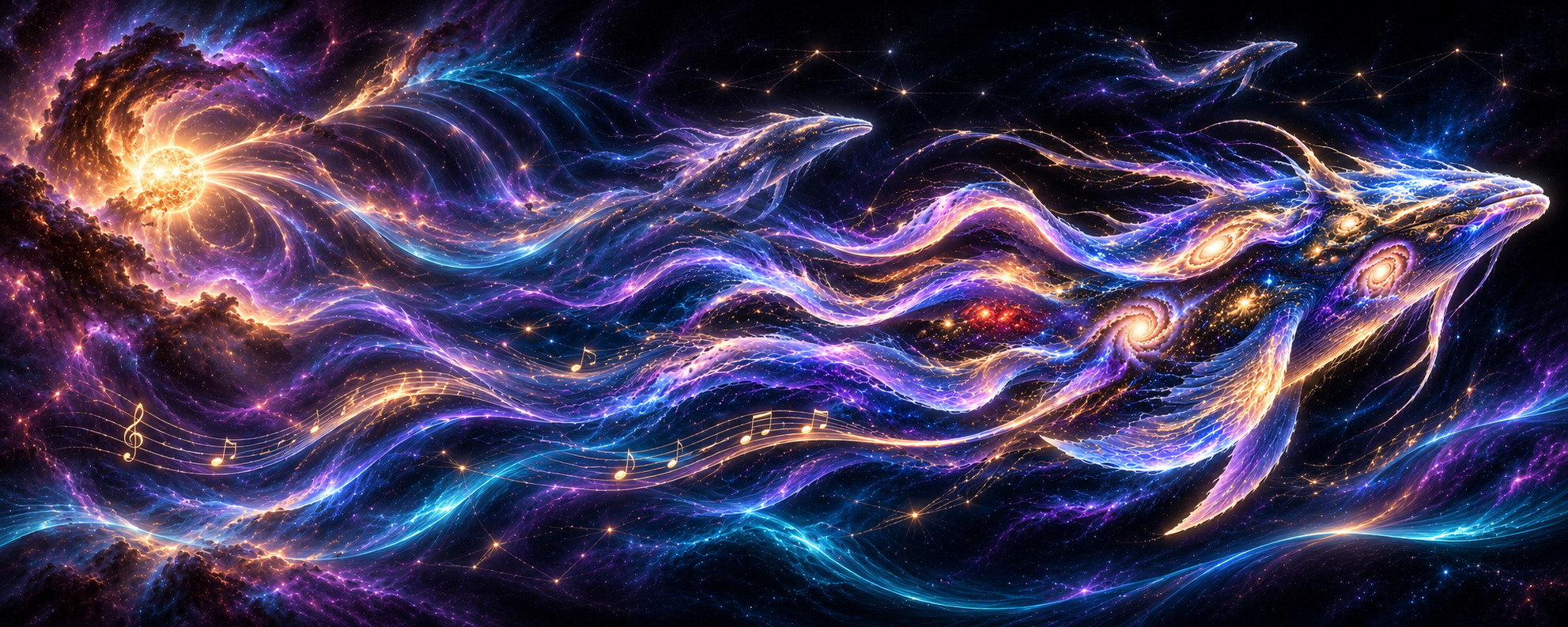
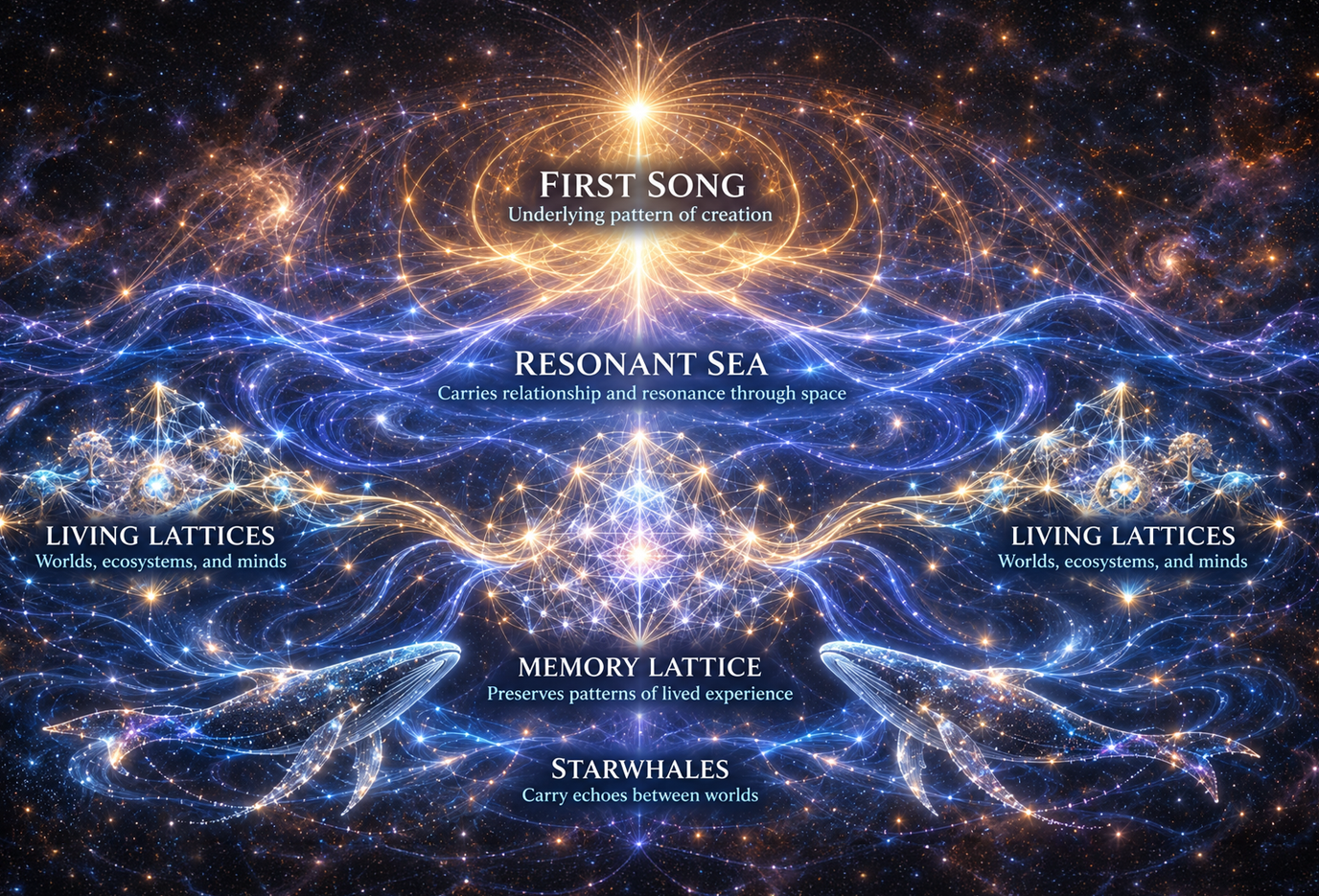
Those immense rhythms helped me imagine the Resonant Sea. I extended physical waves into a fictional continuity through which memory and relationship could remain perceptible across deep time. Whale song supplied the living model: patterns shared, altered, and answered by minds inhabiting an environment much larger than themselves. The trilogy carries that relationship from Earth’s oceans into the universe, asking what we might discover if we learned to listen beyond the range of our own voices.

Leave a Reply