

Behind the Songs is a series of short reflections on the worlds, ancient histories, and cosmology of my Songs of the Universe trilogy. In each post, I explore one idea—what it means within the story, how it connects to the larger journey, and how science, nature, philosophy, and imagination helped bring it to life.

Behind the Songs • Part 14
The Resonant Sea: What Lyra Became
A world can disappear without everything it made becoming absent. Its inhabitants may be gone, yet their lives have already changed what follows. Something has been inherited, something altered, and possibilities now exist that would never have existed without them. When I imagined Lyra’s ending, I wanted to explore that continuity on a scale larger than any surviving monument or remembered name.
The Kav’anara had faltered. Aelion and Elysia could no longer hold together what needed to become the shared work of their people. As the V’korr overwhelmed Lyra, those who remained faced a final choice. They could continue trying to preserve a form that was failing, or release what they could into a continuity beyond their world.
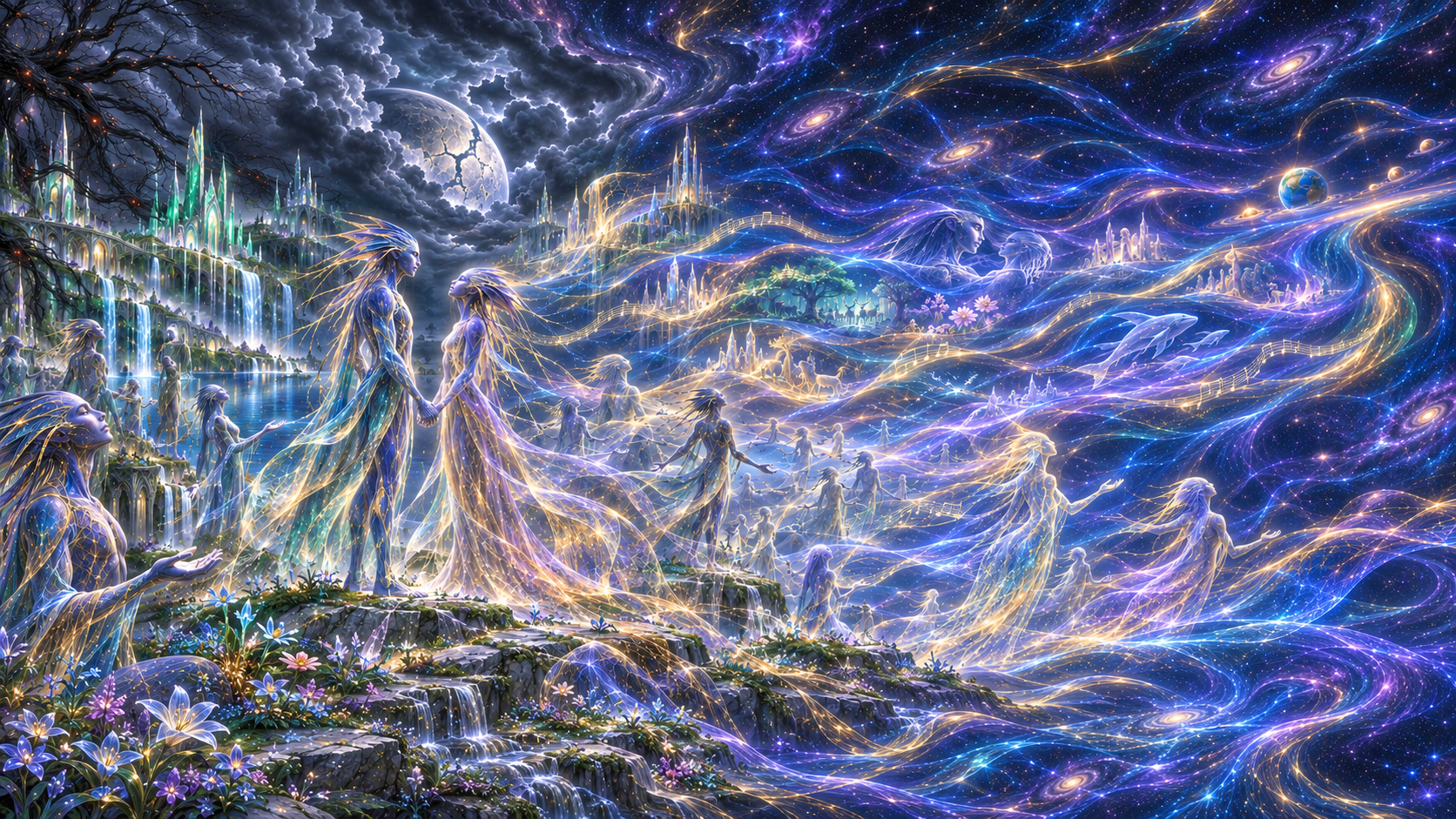
No command compelled them. One by one, they chose. Bodies loosened into waveforms, cities into light, and memory separated from the places that had held it. Aelion and Elysia went with them. Some Lyr’een had already fled and would carry Lyra’s history throughout the universe. For those who remained, release allowed something of their consciousness and experience to enter the deeper currents of spacetime.

Those currents became known as the Resonant Sea. Lyra’s released consciousness entered the deeper continuity of spacetime, where its patterns of memory and relationship could endure across eons. What had once belonged to a single world could now reach lives unfolding among distant stars, long after its people and cities had vanished.
The ocean offered me a way to approach that idea.
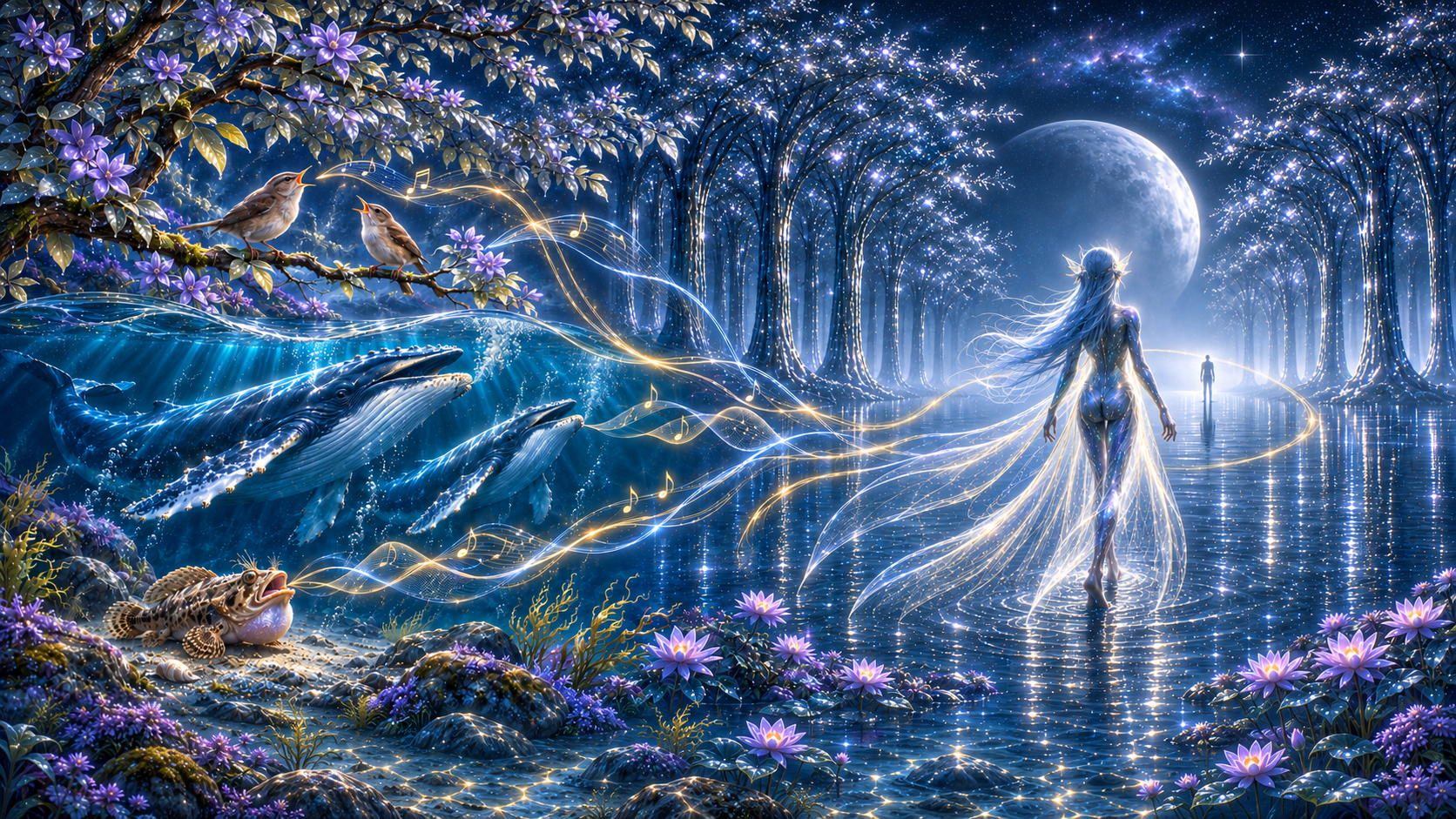
A current connects places whose inhabitants may never meet. Water carries heat, nutrients, oxygen, and living organisms across distances far beyond the awareness of any individual creature. Conditions in one region help shape life in another. Along a coastline, the arrival of different water can change what grows, feeds, or survives there. The connection becomes visible through its consequences.
I imagined Lyra’s presence moving through the universe in a related way but at a much larger scale in space and time. Its experience could affect the conditions in which another consciousness encountered the world. A being might sense an unfamiliar grief, recognize the danger in a certainty it had trusted, or feel the possibility of remaining open when fear urged withdrawal. What reached that being would depend on its capacities and circumstances. The Sea carried orientation, leaving the response unfinished.
Biological inheritance offered another starting point. Every living organism arrives through a lineage extending far beyond its own life. Inherited capacities meet new conditions, and each generation lives with consequences it did not create. Ecosystems carry such histories too: the physical structures organisms build and the environments they alter become part of what later lives encounter.

Earth’s geological record extends that continuity across immense stretches of time. Ancient microbial activity helped transform the chemistry of oceans and atmosphere, changing the possibilities for subsequent evolution. Rocks retain evidence of those transformations, while living beings continue inhabiting their consequences. The past persists both as a record we can investigate and as conditions we cannot step outside.
These relationships allow the past to participate in the present. I imagined a universe in which that continuity extended into spacetime itself. This was the fictional step behind the Resonant Sea: experience could leave patterns that remained available beyond biological descent, beyond a planet’s atmosphere, and beyond the survival of the civilization that first lived them.
The Memory Lattice preserves those patterns; the Sea is their movement into new relationships. Neither supplies a perfect account of what happened. Lyra’s knowing survives as fragments, tendencies, and encounters through which another life might understand something differently. Its mistakes travel alongside its love. Its beauty does not erase the grief of its ending.
The Starwhales carry those possibilities across distances inaccessible to ordinary travel. They do not deliver Lyra’s history intact or explain its meaning. Their passage sustains resonances that another consciousness may become capable of hearing. Across eons, a vanished world can therefore influence a civilization that never knew its name.
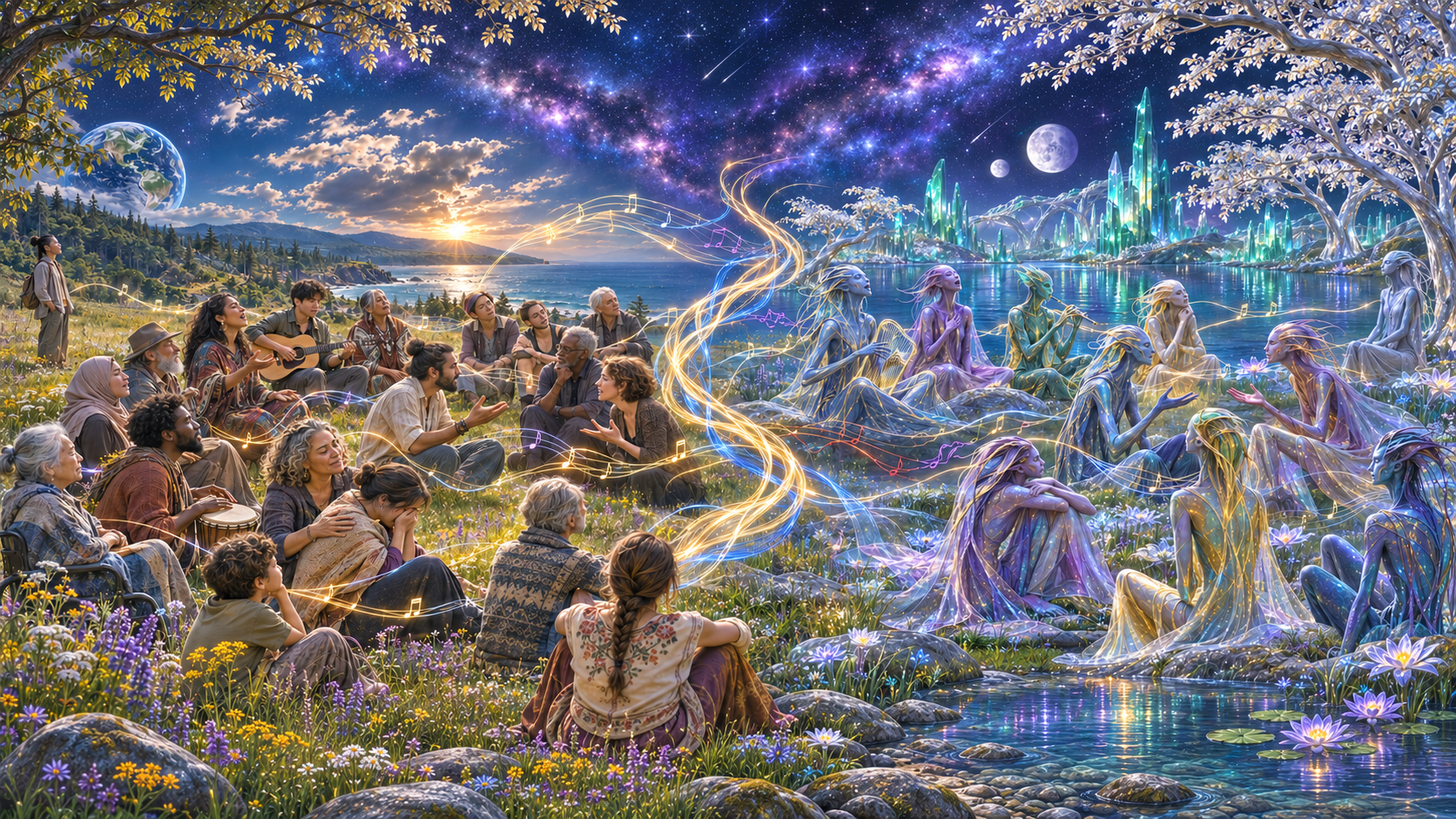
That possibility mattered to the larger story. A later people might encounter something of Lyra’s experience and still misunderstand it. They might repeat its dependence on a few central voices—or recognize the need to distribute care more widely. Inheritance offers another opportunity to learn, without guaranteeing wisdom.
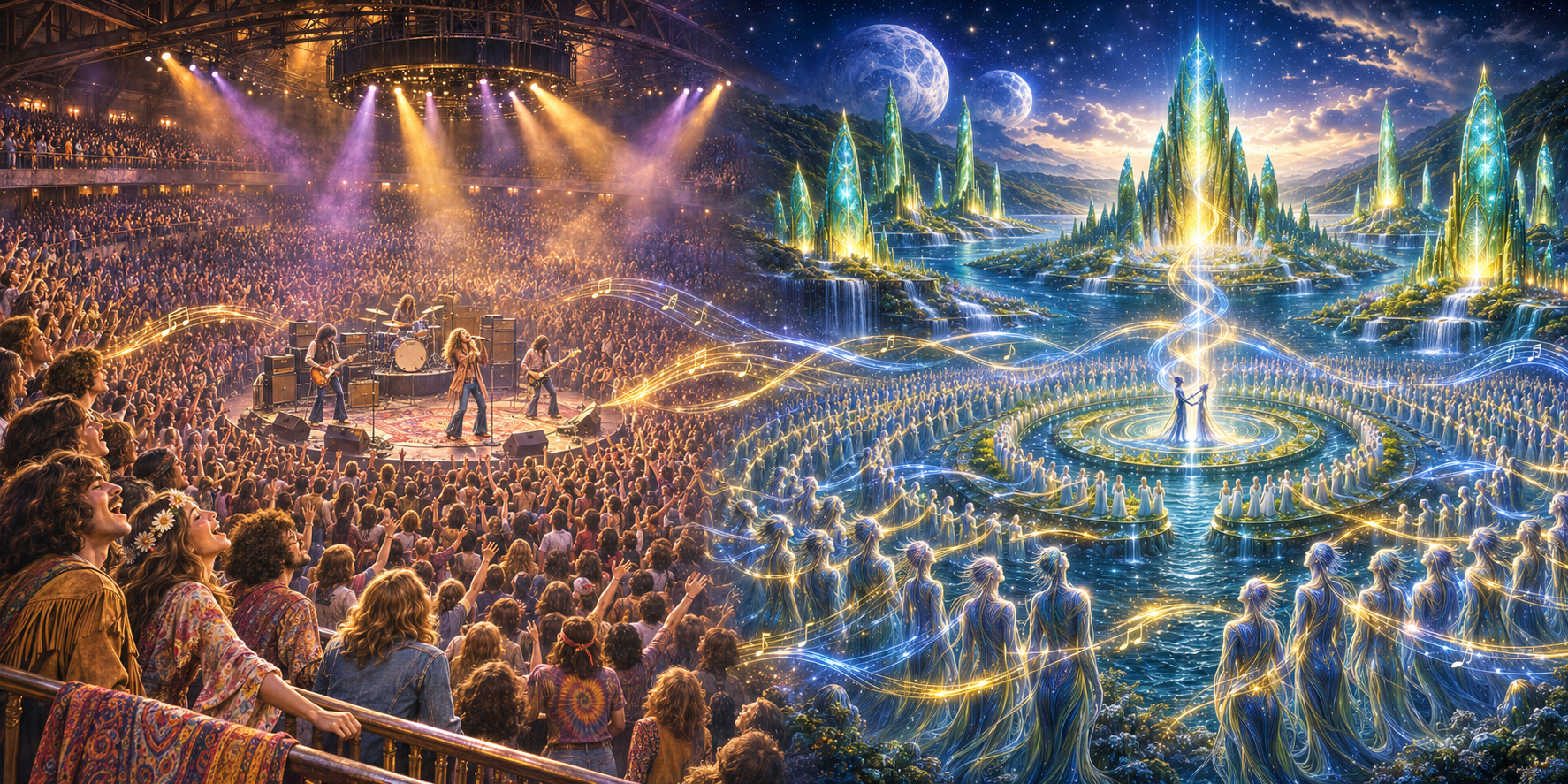
Each generation inherits something unfinished and adds consequences of its own. I wanted that to remain true even across galaxies. Lyra’s release could not undo its losses, but what its people had attempted need not end with them. Their experience entered a universe still becoming capable of hearing it. Somewhere, much later, another voice might answer—and carry the Song somewhere Lyra itself had never learned to go.

Lyra’s ancient song grew from that desire, its interrupted phrases carried forward through the Lattice, the Starwhales, and the voices of later beings. Each encounter reveals something while leaving a larger history partly obscured. In The Spiritual Engineers, that incompleteness makes the universe feel alive with rich layers of inheritance, giving Rigel and Merope relationships with a past they must gradually learn to hear and understand. What they inherit includes both possibilities and unfinished mistakes—patterns they may transform or repeat, for better or worse, through choices whose consequences they cannot yet fully see.

Leave a Reply