


Behind the Songs is a series of short reflections on the worlds, ancient histories, and cosmology of my Songs of the Universe trilogy. In each post, I explore one idea—what it means within the story, how it connects to the larger journey, and how science, nature, philosophy, and imagination helped bring it to life.

Behind the Songs • Part 3
The First Song:
Becoming Many Without Becoming Separate
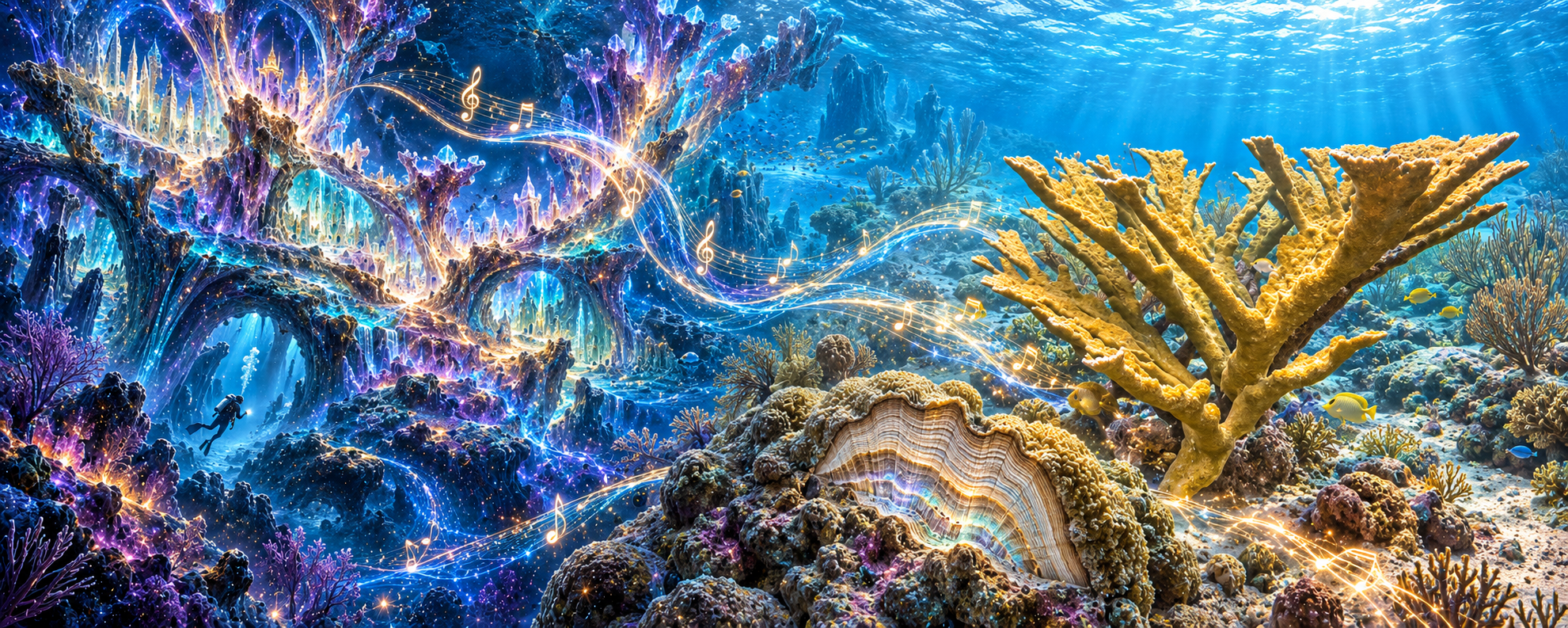
An ocean contains countless lives, most of which will never encounter one another. Yet currents, nutrients, feeding, and reproduction connect them across distances far beyond their individual reach. Studying those relationships as a marine ecologist shaped how I imagined Thalassa and, eventually, the universe surrounding it. I kept returning to a question that reaches beyond ecology: how can something belong to a larger whole while remaining itself? The First Song grew from that question.
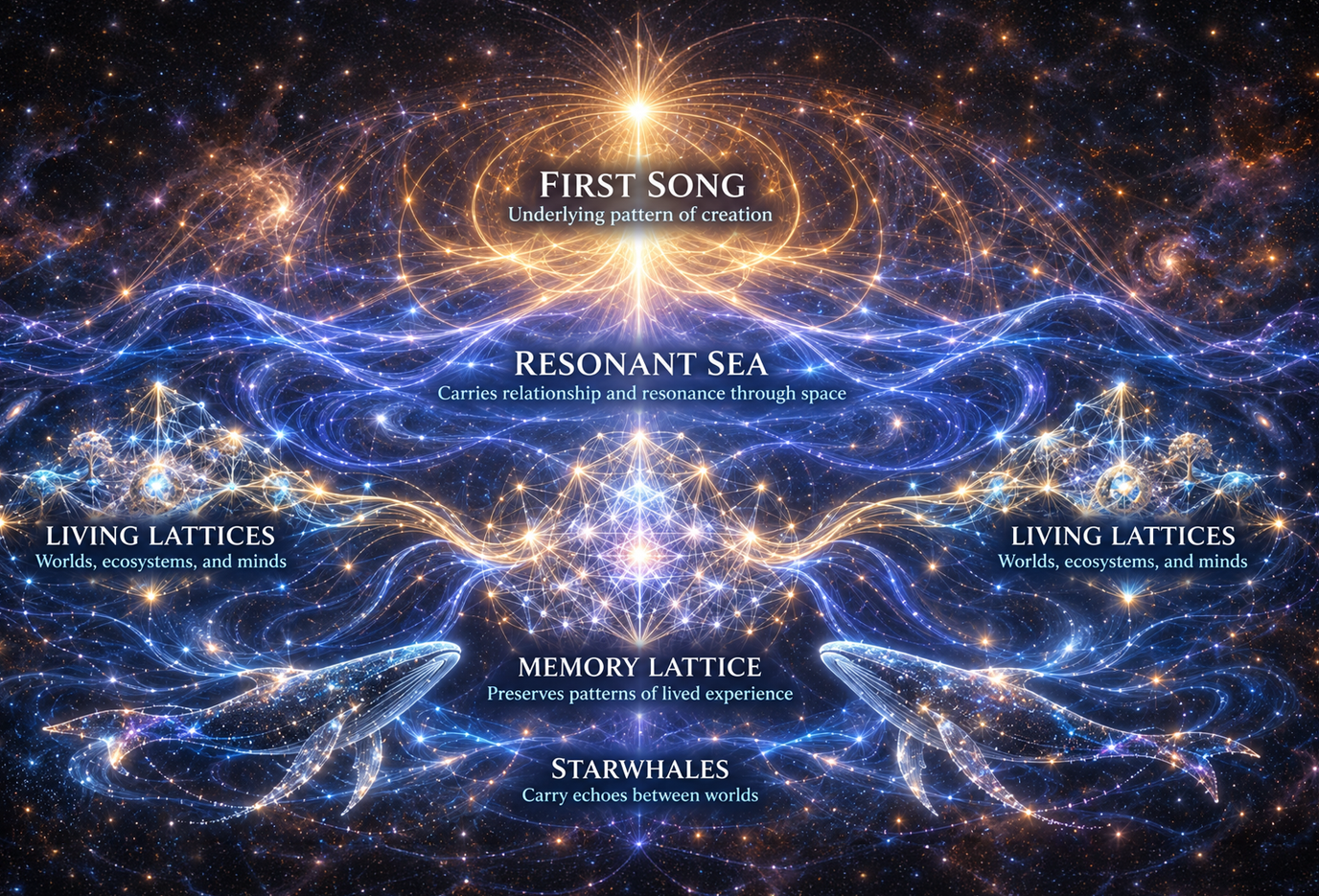
Within the trilogy’s cosmology, the First Song precedes civilizations and individual singers. The Elder Voices—the primordial presences that first gave expression to this harmony—sounded it at the dawn of creation, before any living world could recognize what it was hearing. It was never a melody in the ordinary sense. It was the braided field of holding and opening, gathering and release—the relationship through which reality could remain continuous while also remaining unfinished. Holding allowed connections to endure; opening allowed new forms and possibilities to emerge.
I imagined those movements together because either one, carried too far, could become destructive. A universe that only held would leave no room for change. One that only opened could retain nothing long enough for a relationship to develop. The First Song allowed difference to emerge within continuity: stars, worlds, and eventually living beings could acquire their own identities without losing every connection to what had formed them. In this imagined beginning, relation made further becoming possible.

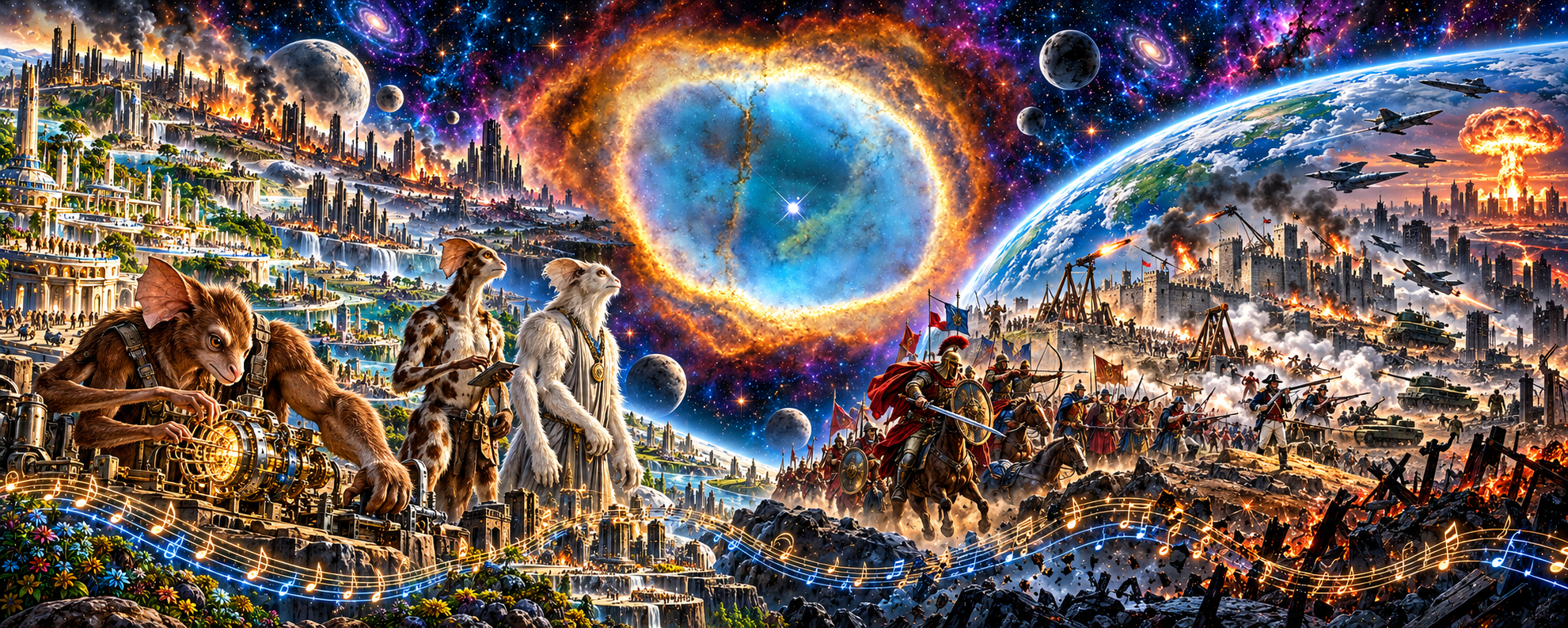
Ecology offered a tangible way to think about that balance. A cell maintains a boundary while exchanging materials with its surroundings. Organisms form partnerships, and ecosystems depend on exchanges among lives with different needs and capacities. Those relationships include competition, predation, and disturbance, alongside mutualism. I carried their complexity into the First Song, imagining that wherever life evolved through sustained reciprocity, it unknowingly echoed something woven into creation.
Music helped me express why difference matters. A shared song can hold distinct voices, each contributing something the others cannot supply. Listening allows a singer to respond—to leave space, change emphasis, or sustain a note while another voice moves. I found in that relationship a way to imagine belonging that preserves individuality. The strength of the whole depends partly on what remains different within it.
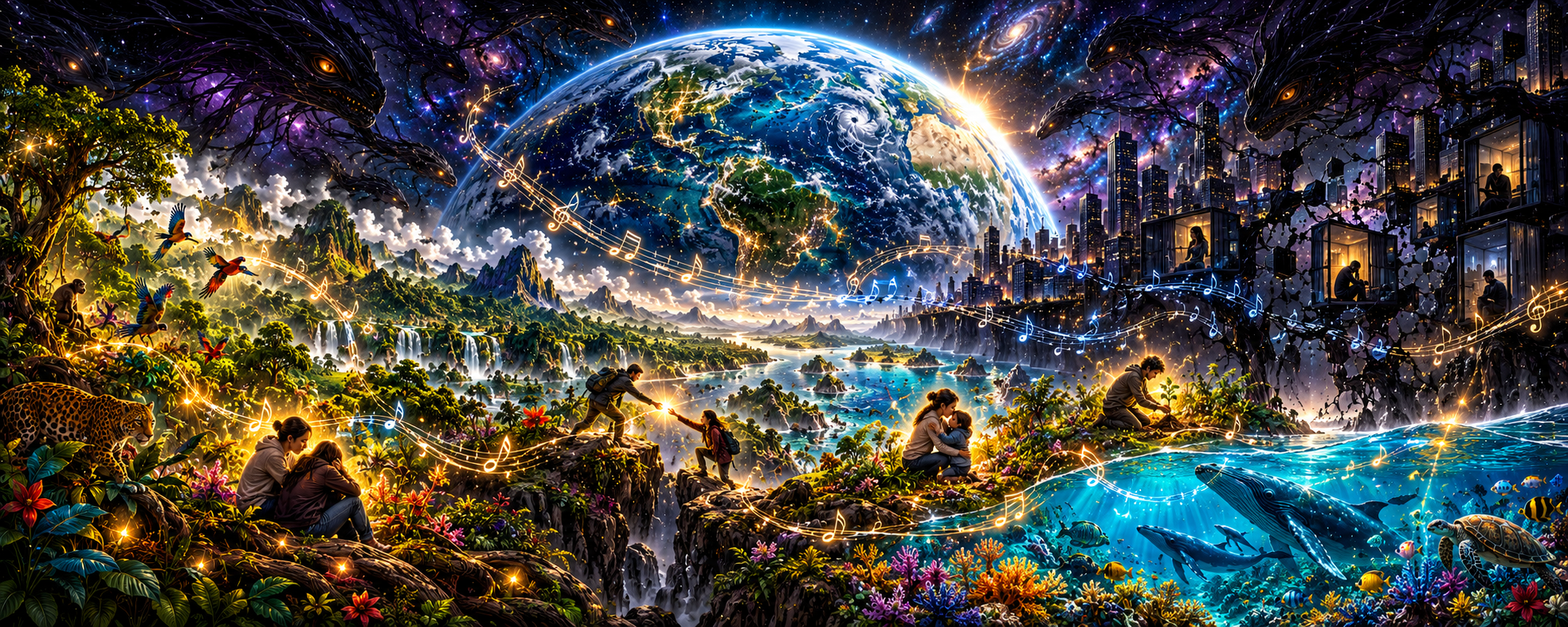
The same tension enters our lives through love, family, and community. We want connection, yet we also need room to think, change, disagree, and sometimes withdraw. Love becomes difficult when closeness leaves no space for another person’s independence. In the novels, holding and opening give those needs a cosmic expression. Connection must be strong enough to endure change and generous enough to permit it.

Much later, other beings learn to enter the First Song consciously. They give an ancient relationship new voices, carrying it through their own experiences of fear, affection, and loss. That possibility runs beneath the trilogy’s journeys: becoming more fully ourselves can deepen what we share. I wanted the universe’s earliest harmony to leave room for every life still to come—and for each to contribute something creation had never heard before.

Leave a Reply