

Behind the Songs is a series of short reflections on the worlds, ancient histories, and cosmology of my Songs of the Universe trilogy. In each post, I explore one idea—what it means within the story, how it connects to the larger journey, and how science, nature, philosophy, and imagination helped bring it to life.

Behind the Songs • Part 5
When Civilizations Stopped Listening:
The Age of Fracture
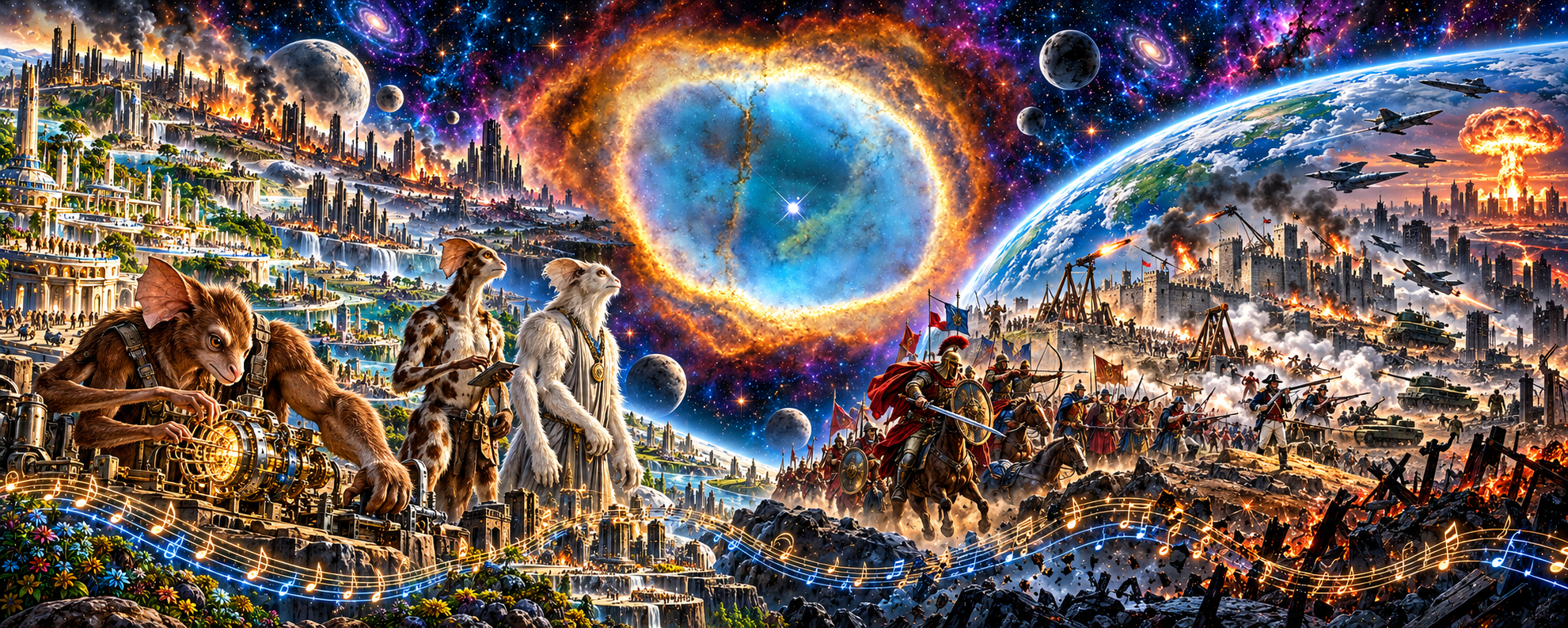
When I imagined the universe’s earliest civilizations, I was also thinking about Earth’s future. What happens when a species acquires the technological power to change its world faster than it can understand the consequences? What happens when it carries those abilities beyond its home? I gave different civilizations different answers, imagining their histories as experiments in whether intelligence could become sustainable. The Age of Fracture grew from the many ways those experiments failed.
In the trilogy’s imagined history, technological civilizations were rare. Each depended on an extraordinary succession of circumstances that allowed life, awareness, and accumulated knowledge to persist. Most destroyed themselves or simply died-out before reaching other stars. Their tools became powerful enough to disrupt the living systems that supported them, while their social-political institutions remained poorly equipped to recognize or restrain the damage. Some understood what was happening but could not cooperate long enough to change course.
Others expanded before their failures caught up with them. They established settlements, opened trade routes, and carried their cultures into neighboring systems. For a time, distance and new resources made continued growth possible. But expansion could also postpone a reckoning, allowing a civilization to repeat elsewhere what had already exhausted its home. Eventually, its settlements fell silent, leaving scattered remnants of a future that had once seemed assured.

A more dangerous trajectory belonged to civilizations that survived by making destruction part of their continued expansion. They consumed inhabited worlds, imposed their own order, or treated other lives as obstacles to resources. Their reach allowed the consequences of their choices to spread far beyond their origins. Trade carried dependence alongside opportunity; conflicts drew distant worlds into wars they had not begun. Connections multiplied faster than the capacity to live responsibly within them.
That widening gap marks the beginning of the Age of Fracture. Civilizations could influence one another across immense distances while understanding very little about the lives they affected. The V’korr found purchase in the resulting fear, division, and despair. They fed on fractures that living societies had already created. A failure to listen could now darken more than a single world.
As a marine ecologist, I found those possibilities uncomfortably familiar. We can alter a food web without understanding every relationship within it, then discover the missing knowledge through consequences we cannot easily reverse. I wanted these imagined histories to explore what Earth might need to learn before carrying its habits farther. Sustainability required more than finding another supply of energy or another place to settle. It required noticing damage, accepting limits, and changing behavior while choices remained available.
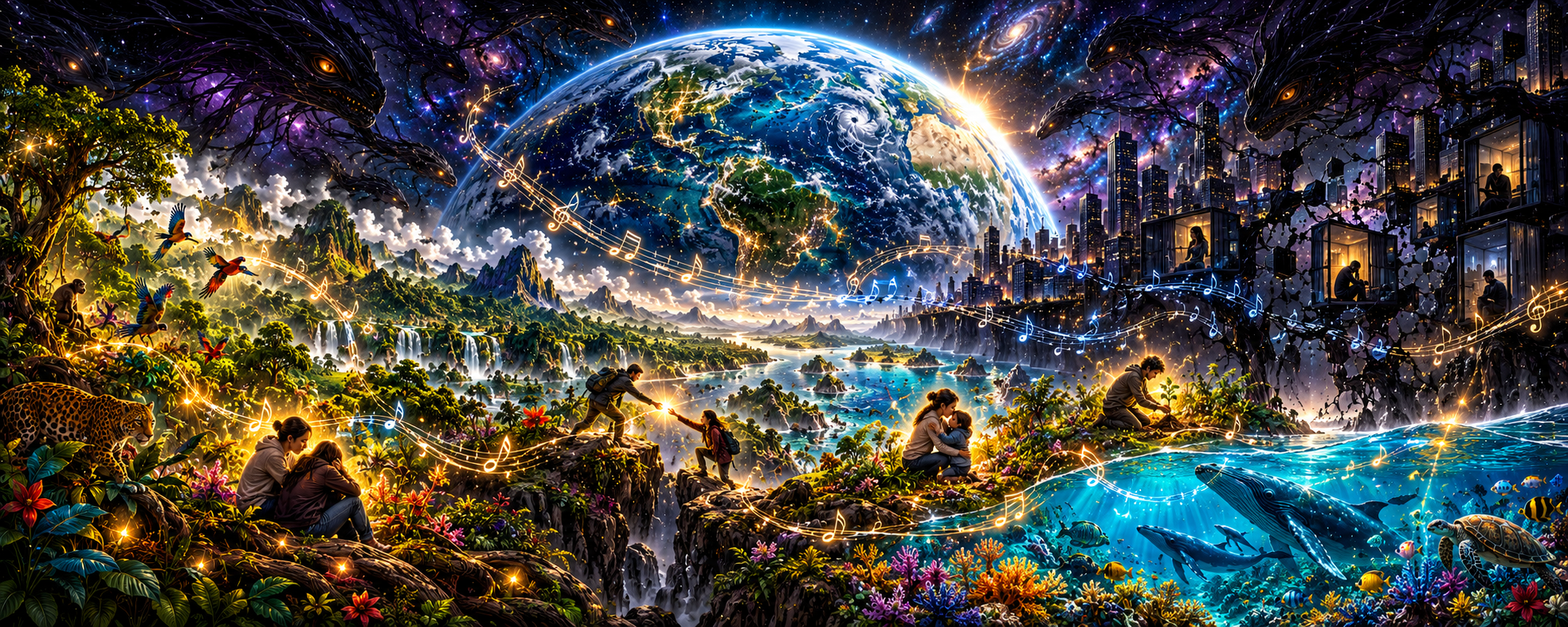
A very few civilizations began to learn that way. They preserved accounts of failure, allowed unfamiliar perspectives to challenge established beliefs, and treated survival as an ongoing practice. They still made mistakes, but learned to recognize the damage and change course. They preserved the lessons of earlier generations and listened to other species and communities whose different experiences revealed consequences they had overlooked.
Those civilizations raised another question for me: could hard-earned understanding endure beyond the people who acquired it? If every world had to begin again, the universe would keep paying for the same lessons. This question arose from the early influence of Larry Niven and Jerry Pournelle’s book, The Mote in God’s Eye, which I read in college.

In the story, humans discover Motie museums that preserve knowledge through repeated cycles of civilizational collapse. The Moties can recover what earlier generations discovered, yet still repeat the conditions that brought them down, over and over, for millions of years. That lesson matters here: preserving knowledge gives the future something to build upon, but learning how to live differently requires more.
In the trilogy’s cosmology, I imagined those experiences leaving resonant impressions within spacetime, like notes that continued to vibrate after their original singers were gone. What endured was something of the experience itself: grief following loss, fear hardening into cruelty, or trust slowly returning between former enemies. A later consciousness encountering that resonance might respond as one string answers another, recognizing something familiar in a life utterly different from its own. Across immense stretches of time, these echoes accumulated and intertwined, becoming the Memory Lattice. Its unfinished music offered later civilizations a chance to hear what others had lived through—and decide how they would answer.



Leave a Reply